




Climate change and environmental degradation affect ecosystems and the physiological processes of women’s reproductive systems through complex biological and social mechanisms. Exposure to environmental hazards has been associated with reproductive health problems, including infertility, menstrual irregularities, hypertensive disorders of pregnancy, preterm birth, and adverse neonatal outcomes. Research findings suggest that environmental exposures can cause direct biological damage to women’s reproductive systems and indirect socioeconomic consequences. Increasing evidence indicates that climate change intensifies the frequency and severity of these harmful environmental exposures, thereby exacerbating existing inequalities in women’s reproductive health. This review examines the impacts of climate change and environmental determinants on women’s reproductive health from a nursing and health policy perspective. We synthesize current evidence on key environmental determinants, identify gaps within global frameworks, and propose recommendations for policy integration, clinical practice, education, research, and advocacy. Our review highlights the lack of a comprehensive approach linking environmental and reproductive health, the limited use of gender-sensitive indicators, and the insufficient integration of nursing leadership into environmental health decision-making processes. Nurses play a critical role to strengthen the connection between environmental and reproductive health through risk reduction strategies, community education, and policy advocacy. Strengthening nursing leadership, integrating planetary health concepts into nursing education, and incorporating reproductive health indicators into environmental policies are essential strategies to achieve sustainable and equitable health outcomes for women amid the effects of climate change.
Key Words: climate change, environmental health, women’s reproductive health, nursing, policy, planetary health
Climate change and environmental degradation represent an escalating global public health crisis that threatens the sustainability of human health (Parums, 2024; Pavlova et al., 2024; World Health Organization [WHO], 2020; Wright et al., 2023). The WHO has identified the health burden caused by rising temperatures, air pollution, and environmental toxins as one of the major global health threats of the 21st century (Azhar et al., 2024). When these environmental conditions intersect with biological processes such as menstruation, pregnancy, and lactation and with gender inequalities, the health risks for women of reproductive age increase substantially (Arunda et al., 2024; Giudice et al., 2021; Langer et al., 2015; Temmerman et al., 2025). This convergence underscores the urgent need for the systematic assessment of women’s reproductive health within the context of the climate crisis. When these environmental conditions intersect with biological processes ... the health risks for women of reproductive age increase substantially.
Epidemiological and clinical studies have demonstrated significant associations between exposure to particulate matter, toxic chemicals, and climate-related events such as extreme heat, floods, and droughts and a wide range of reproductive health outcomes. These outcomes include infertility, menstrual irregularities, hypertensive disorders of pregnancy, preterm birth, and adverse neonatal outcomes (Bai et al., 2020; Chersich et al., 2020; Fayazi et al., 2020; Xu et al., 2025). In particular, extreme heat exposure during pregnancy has been associated with increased risks of preterm birth and hypertensive disorders of pregnancy, whereas air pollution has been linked to infertility and adverse birth outcomes (Bai et al., 2020; Chersich et al., 2020; Fayazi et al., 2020).
These biological effects interact with social determinants such as displacement, food insecurity, and inequitable access to healthcare, thereby deepening women’s vulnerability (Osman et al., 2025; Wright et al., 2023). Therefore, health risks arising from climate and environmental changes must be addressed at the individual level and also within broader social and structural contexts. ...health risks arising from climate and environmental changes must be addressed at the individual level and also within broader social and structural contexts.
The planetary health approach provides a holistic framework for understanding the multilayered interaction between human health and environmental integrity. Within this perspective, reproductive health is viewed not merely as a clinical issue but as a critical priority situated at the intersection of environmental justice and social equity (Langer et al., 2015; Wright et al., 2023). However, current policy and practice frameworks remain far from adopting a truly integrated approach to the environment–health–gender nexus. Environmental policies often fail to incorporate reproductive health indicators, while reproductive health programs seldom monitor environmental exposures in a systematic way (Arunda et al., 2024; OECD, 2021; Temmerman et al., 2025). This gap underscores the need to develop integrated and gender-responsive policy and practice models. The planetary health approach provides a holistic framework for understanding the multilayered interaction between human health and environmental integrity.
Our review aims to examine the impact of climate change and environmental health factors on women’s reproductive health through a comprehensive lens that integrates nursing and policy perspectives. Specifically, we summarize key environmental determinants, identify existing gaps within global health frameworks such as those of the WHO and the Sustainable Development Goals, and propose actionable recommendations for policy integration, clinical practice, education, research, and advocacy. This approach provides a foundation for building an equitable and sustainable global strategy to protect women’s reproductive health in the face of the escalating climate crisis.
Environmental Determinants of Women’s Reproductive Health
Air Pollution and Reproductive Outcomes
Air pollution is one of the most prevalent environmental threats to reproductive health worldwide (Giudice et al., 2021; Wright et al., 2023; Zangerl et al., 2024). Exposure to fine particulate matter (PM₂.₅ and PM₁₀), nitrogen dioxide (NO₂), sulfur dioxide (SO₂), and ozone (O₃) has been linked to a wide range of reproductive and perinatal complications, including infertility (Lo et al., 2025), menstrual irregularities (Begum et al., 2022), preterm birth, and low birth weight (Desye et al., 2024; Melody et al., 2020). The mechanisms underlying these associations include oxidative stress, systemic inflammation, and endocrine disruption, which may impair ovarian folliculogenesis, alter hormone levels, and restrict placental blood flow (Giudice et al., 2021; Wdowiak et al., 2018). Air pollution is one of the most prevalent environmental threats to reproductive health worldwide.
These findings highlight air pollution as a critical factor at the intersection of biological and environmental processes influencing women’s reproductive health, underscoring the need for a holistic understanding of how environmental exposures affect reproductive outcomes. This risk is particularly pronounced among women living in highly urbanized or industrialized areas, where chronic exposure to traffic-related and industrial air pollutants may contribute to infertility, hypertensive disorders of pregnancy, preterm birth, and low birth weight (Bai et al., 2020; Desye et al., 2024; Lo et al., 2025; Melody et al., 2020).
Emerging evidence indicates that exposure to air pollution may accelerate the age-related decline in fertility by reducing ovarian reserve and negatively affecting oocyte quality (LaPointe et al., 2024; Vallée et al., 2024). Studies have shown that women living in highly polluted urban areas have increased risks of gestational hypertension and preeclampsia, two leading causes of maternal morbidity and mortality (Bai et al., 2020; Fayazi et al., 2020; Hu et al., 2014). Furthermore, prenatal exposure to air pollutants has been associated with developmental delays in infancy (Liu et al., 2022; Yorifuji et al., 2016) and respiratory complications (Korten et al., 2017). Maintaining environmental health is therefore essential to improve both maternal and intergenerational health outcomes (Kim et al., 2018; Korten et al., 2017; Liu et al., 2022; Yorifuji et al., 2016). These findings demonstrate that the effects of environmental pollutants on women’s health extend beyond pregnancy, creating a long-term impact that begins with reproductive capacity and shapes health outcomes across generations. These findings demonstrate that the effects of environmental pollutants on women’s health extend beyond pregnancy...
It is crucial to strengthen environmental risk assessment and health education programs within nursing practice. Nurses working in primary care and obstetric settings play a vital role in assessing individual environmental exposure histories, providing risk-based counseling, and advocating for clean air policies (Sánchez Sauco et al., 2020). During prenatal visits, nurses can screen pregnant women for environmental exposures by asking about residential proximity to industrial areas, heavy traffic zones, or indoor pollution sources such as biomass fuels. Such environmental exposure histories allow the early identification of high-risk pregnancies and enable nurses to provide targeted counseling on strategies to reduce air pollution exposure during pregnancy. Moreover, integrating environmental health indicators into maternal and reproductive health programs can contribute to the early detection and prevention of pollution-related risks (Pavlova et al., 2024). In this context, nursing practice occupies a central position at the intersection of environmental and reproductive health, extending beyond individual care to fulfill a preventive and advocacy-oriented function at the community level.
Chemical Exposures: Endocrine Disruptors, Pesticides, and Heavy Metals
Chemical exposures, particularly endocrine-disrupting chemicals (EDCs), pesticides, and heavy metals pose a significant threat to reproductive health. Compounds such as bisphenol A (BPA), phthalates, organophosphates, and lead have been shown to disrupt hormonal regulation, inhibit ovulation, and adversely affect embryonic development (Gautam et al., 2024; Ozkemahli et al., 2022; Rattan et al., 2017). Endocrine disruptors mimic natural hormones and interfere with the normal functioning of the endocrine system, leading to altered estrogen and progesterone signaling, menstrual irregularities, and an increased risk of miscarriage and infertility (Giudice et al., 2021). These findings indicate that environmental chemicals interact intricately with biological systems, influencing women’s reproductive health at both cellular and hormonal levels; therefore, their effects should be addressed not only as individual exposures but also within the context of social and environmental regulation. ...environmental chemicals interact intricately with biological systems, influencing women’s reproductive health at both cellular and hormonal levels...
A substantial proportion of this exposure occurs through everyday consumer products, including food packaging, cosmetics, household plastics, and personal care items, resulting in continuous low-dose contact that may contribute to hormonal imbalance, menstrual disturbances, and reduced fertility (Giudice et al., 2021; Ozkemahli et al., 2022).
Heavy metals such as cadmium, mercury, and lead accumulate in placental and maternal tissues, impair fetal growth, and increase the risk of preterm birth and congenital anomalies (Al-Saleh et al., 2014; Gundacker & Hengstschläger, 2012; Shih et al., 2021). Occupational exposure among women working in agricultural and industrial sectors is particularly pronounced in low- and middle-income countries, where regulatory protections are limited, disproportionately affecting these populations A substantial proportion of this exposure occurs through everyday consumer products, including food packaging, cosmetics, household plastics, and personal care items... (Quintero Santofimio et al., 2024). Women employed in agricultural settings may be especially vulnerable because repeated exposure to pesticides during planting and harvesting seasons has been associated with menstrual disturbances, infertility, and adverse pregnancy outcomes (Ngowi et al., 2016; Runkle et al., 2014). This situation reveals that exposure to environmental toxins is not only a biological concern but also a multidimensional public health issue intertwined with socioeconomic inequities, emphasizing that environmental justice must be considered an integral component of reproductive health.
The lack of unified and binding global policies on chemical safety contributes to widening gender-based health disparities. Nurses can play a vital role in mitigating these risks by leading environmental health education programs in agricultural communities, advocating for stronger pesticide safety regulations, and supporting the implementation of workplace protection measures (Praserttai et al., 2025; Valentine-Maher et al., 2018). In clinical settings, nurses can incorporate screening questions on chemical exposure into routine reproductive health assessments and refer at-risk individuals for environmental monitoring or detoxification interventions. Thus, nurses are positioned at the center of efforts to reduce reproductive health risks associated with environmental toxins through clinical care, policy advocacy, and community education. The lack of unified and binding global policies on chemical safety contributes to widening gender-based health disparities.
Climate Change, Extreme Weather Events, and Reproductive Health
Climate change exacerbates existing reproductive health risks by altering weather patterns, increasing heat exposure, and disrupting food and water systems (Arunda et al., 2024; Segal & Giudice, 2022; Xu et al., 2025). High ambient temperatures have been linked to increased risks of preterm birth, stillbirth, and hypertensive disorders of pregnancy (Chersich et al., 2020; Segal & Giudice, 2022; Xu et al., 2025). Heat stress may also reduce sperm quality and conception rates, adversely affecting reproductive success at the population level (Abdelnour et al., 2022; Celeghini et al., 2024). These risks are particularly relevant for pregnant women living in urban areas during prolonged heatwaves, where dehydration, cardiovascular strain, and increased physiological stress may further elevate the likelihood of preterm birth and other pregnancy-related complications (Chersich et al., 2020; Segal & Giudice, 2022). These findings indicate that climate change should not be viewed solely as an environmental issue but as a biological and social health concern that affects both female and male fertility.
Beyond thermal effects, extreme weather events such as floods, droughts, and wildfires have direct and indirect cascading impacts on reproductive health. In disaster-affected regions, floods may destroy health infrastructure, displace pregnant women, and interrupt access to antenatal and childbirth services, increasing the risk of missed routine visits and unsafe delivery conditions due to damaged healthcare facilities and transportation barriers (Safajou et al., 2024). Drought and resulting food insecurity exacerbate maternal malnutrition and anemia, increasing the likelihood of low birth weight and neonatal complications (Bell et al., 2024; De Silva et al., 2022). Moreover, displacement and resource scarcity heighten the risk of gender-based violence (Osman et al., 2025) and psychosocial stress (Işık et al., 2025), both of which are associated with adverse pregnancy outcomes. Thus, climate change must be addressed as a multidimensional crisis that threatens women’s reproductive health through environmental, social, and psychological pathways. Nurses often serve on the front lines of response during climate-related emergencies.
Nurses often serve on the front lines of response during climate-related emergencies. Their roles extend beyond providing clinical care to include community-based risk communication, disaster preparedness education, and advocacy for climate-resilient health systems. In emergency shelters and disaster-response settings, they may provide displaced pregnant women with antenatal monitoring, psychosocial support, and environmental health counseling. Integrating reproductive health into disaster risk reduction frameworks ensures that women’s needs are prioritized and systematically addressed in emergency response and recovery processes (Kent et al., 2025). This perspective highlights that nurses are not only caregivers but also key agents in building community resilience in the face of climate change–related disasters.
Environmental Justice and Social Inequalities
The unequal distribution of environmental risks reflects broader social inequities based on gender, socioeconomic status, and geographic location. Women living in marginalized communities, particularly those in low-income, rural, or industrialized areas, face structural barriers to accessing healthcare while being disproportionately exposed to environmental hazards (Giudice et al., 2021; Temmerman et al., 2025; Weaver et al., 2023). This inequity is especially evident among women living near industrial zones or waste disposal sites, who may experience chronic exposure to air and water pollutants while simultaneously facing limited access to reproductive health services (Giudice et al., 2021). This reality further deepens pre-existing inequalities in women’s reproductive health (Giudice et al., 2021). Therefore, the disproportionate impact of environmental exposures on women underscores the need for climate and health policies to be restructured not only around ecological sustainability but also on the principle of social equity.
Women employed in agriculture or informal sectors encounter multiple environmental and structural risks simultaneously, such as pesticide exposure, contaminated water sources, and inadequate maternal health services (Arunda et al., 2024; Mishra et al., 2024; Ngowi et al., 2016; Runkle et al., 2014). This pattern is particularly evident in rural agricultural regions, where pregnant women may continue pesticide-related work during pregnancy because of economic necessity, thereby increasing the risks of infertility, miscarriage, and other adverse pregnancy outcomes. Similarly, urban women residing in polluted and poorly serviced neighborhoods often lack access to green spaces and clean air, both of which are key determinants of reproductive and mental health (Giudice et al., 2021; Hubbard et al., 2021). These inequities are intertwined not only with environmental degradation but also with systemic gender discrimination, poverty, and social exclusion (Anjum & Aziz, 2025). This multidimensional pattern of risk demonstrates that women’s vulnerability to environmental exposure extends beyond biological factors and must be recognized as an issue of social justice, urban planning, and public health policy. Table 1 summarizes the major environmental determinants affecting women’s reproductive health, together with their underlying biological mechanisms, associated reproductive health outcomes, and key public health and policy implications.
Table 1. Environmental Determinants of Women’s Reproductive Health: Biological Mechanisms, Health Outcomes, and Public Health and Policy İmplications
|
Environmental Determinant |
Main Mechanism(s) |
Reproductive Health Outcomes |
Public Health and Policy İmplications |
|---|---|---|---|
|
Air Pollution (PM₂.₅, PM₁₀, NO₂, SO₂, O₃) |
Oxidative stress, systemic inflammation, placental dysfunction, endocrine disruption |
Infertility, menstrual irregularities, hypertensive disorders of pregnancy, preterm birth, low birth weight |
Air quality regulation and maternal health surveillance |
|
Endocrine-Disrupting Chemicals (e.g., BPA, phthalates) |
Hormonal dysregulation, altered estrogen/progesterone signaling, impaired ovulation |
Menstrual irregularities, infertility, miscarriage, impaired embryonic development |
Regulation of consumer chemicals and exposure monitoring |
|
Pesticides and Agricultural Chemicals |
Neuroendocrine disruption, oxidative stress, toxic reproductive effects |
Infertility, pregnancy complications, adverse pregnancy outcomes |
Occupational safety policies for agricultural workers |
|
Heavy Metals (e.g., lead, cadmium, mercury) |
Placental accumulation, fetal growth restriction, cellular toxicity |
Preterm birth, congenital anomalies, low birth weight |
Environmental monitoring and pollution control policies |
|
Extreme Heat and Heat Stress |
Dehydration, cardiovascular strain, physiological stress |
Preterm birth, stillbirth, hypertensive disorders of pregnancy |
Heat alert systems and climate-resilient maternal care |
|
Floods, Droughts, Wildfires |
Disruption of healthcare services, displacement, food insecurity, psychosocial stress |
Disrupted antenatal care, low birth weight, neonatal complications |
Disaster preparedness for maternal health services |
|
Environmental İnjustice and Social İnequality |
Unequal environmental exposure and limited healthcare access |
Compounded reproductive risks across the life course |
Environmental justice and equity-oriented health policies |
Key: PM₂.₅: particulate matter ≤2.5 µm; PM₁₀: particulate matter ≤10 µm; NO₂: nitrogen dioxide; SO₂: sulfur dioxide; BPA: bisphenol A.
In community practice, nurses often identify environmental health disparities when caring for women with repeated pregnancy complications linked to housing conditions, In community practice, nurses often identify environmental health disparities when caring for women with repeated pregnancy complications occupational exposure, or limited access to preventive services, prompting advocacy at both local and policy levels. Addressing environmental injustice requires a multisectoral approach that integrates health equity, social policy, and environmental governance (Mishra et al., 2024). As trusted community leaders, nurses are strategically positioned to advocate for environmental justice and amplify the voices of vulnerable women. Through research, policy development, and community engagement, the nursing profession can play a transformative role in advancing reproductive health equity within the broader planetary health agenda (LeClair et al., 2024). In community practice, nurses often identify environmental health disparities when caring for women with repeated pregnancy complications...
Policy Contexts and Global Frameworks
International Policy Frameworks
Although global health policies increasingly recognize the interconnection between environmental change, gender, and reproductive health, the translation of these domains into integrated practice remains limited. The WHO, in its Global Strategy on Health, Environment and Climate Change, emphasizes that environmental determinants contribute to nearly one-quarter of the global disease burden, including adverse maternal and neonatal outcomes (WHO, 2020). Similarly, the United Nations (UN), through the Sustainable Development Goals (SDGs) particularly SDG 3 (Good Health and Well-being), SDG 5 (Gender Equality), and SDG 13 (Climate Action) highlights that progress in addressing climate change, gender equality, and improved health outcomes are mutually reinforcing processes (Langer et al., 2015; Temmerman et al., 2025; United Nations, 2015). However, these global frameworks reveal persistent gaps in aligning environmental sustainability goals with reproductive health policies and in institutionalizing a health equity perspective in implementation efforts. Despite this growing awareness, the implementation of such goals often fails to address specific needs of women’s reproductive health.
Despite this growing awareness, the implementation of such goals often fails to address specific needs of women’s reproductive health. Global policy frameworks tend to prioritize broad environmental objectives such as climate resilience and pollution reduction over direct attention to reproductive and maternal health services. Moreover, international climate adaptation funds and health impact assessments rarely include sex-disaggregated indicators, leading to inadequate evaluation of women’s vulnerability to environmental hazards (International Union for Conservation of Nature [IUCN], 2021; OECD, 2021; Temmerman et al., 2025). This omission demonstrates that unless global environmental and health policies are systematically integrated through a gender lens, the effects of environmental inequities on women’s reproductive health risk being rendered invisible.
In recent years, approaches that frame women’s empowerment in climate action as both a means and an end have gained prominence (Anjum & Aziz, 2025; Temmerman et al., 2025). This perspective positions women not merely as beneficiaries of health policies but as active decision-makers and agents of change in the development of climate solutions (OECD, 2021). Within the SDGs, particularly SDG 5 (Gender Equality) and SDG 13 (Climate Action), strengthening women’s leadership and systematically integrating gender equality into environmental and health policies are essential (Langer et al., 2015). Integrating reproductive health into environmental governance frameworks contributes to advancing women’s bodily autonomy and health rights within the broader context of global climate justice (Temmerman et al., 2025). This approach highlights women’s agency in climate action as a transformative force that supports not only gender equality but also the sustainability of planetary health.
Such international commitments provide nurses with an opportunity to advance reproductive justice as a core component of planetary health and to expand global advocacy efforts (Temmerman et al., 2025; Ward et al., 2025). Professional nursing organizations and leadership structures can actively contribute to this transformation by developing policy frameworks that link clinical practice standards with the principles of environmental sustainability and gender equality (Anåker et al., 2015; Ediz & Uzun, 2025; LeClair et al., 2024). Such international commitments provide nurses with an opportunity to advance reproductive justice as a core component of planetary health and to expand global advocacy efforts. In addition to national initiatives, international examples also illustrate how nursing leadership can contribute to climate-resilient health systems. In Small Island Developing States, where communities face acute climate-related risks such as sea-level rise, extreme heat, and tropical storms, nurses and midwives have taken part in climate adaptation and disaster preparedness efforts (Kent et al., 2025). In Pacific Island settings, they contribute to community education, emergency planning, and support for vulnerable populations during climate-related events (Kent et al., 2025; UNICEF Pacific et al., 2025). These initiatives demonstrate how nursing practice can integrate environmental awareness, reproductive health protection, and community resilience within climate-vulnerable regions (Kent et al., 2025).
Regional and National Initiatives
At the regional level, environmental policy initiatives have taken significant steps toward reducing the health impacts of pollution. Strategies in Europe, through frameworks such as the Ambient Air Quality Directive and the European Green Deal, aim to protect public health by establishing environmental thresholds (European Commission, 2019; European Parliament, 2008). However, these strategies often fail to include gender-specific monitoring indicators related to reproductive health (OECD, 2021; Temmerman et al., 2025). Similarly, in many countries, national action plans addressing climate change and environmental health lack cohesive governance structures due to limited coordination between institutions responsible for health and environmental management (IUCN, 2021; Republic of Turkey Ministry, 2012). This situation reveals that the lack of coherence among environment–health–gender policies stems not only from institutional fragmentation but also from the limited capacity of health systems to monitor gender-sensitive environmental indicators. At the regional level, environmental policy initiatives have taken significant steps toward reducing the health impacts of pollution.
Turkey’s Climate Change Action Plan (2011–2023) and Nationally Determined Contribution (2023) include general objectives related to health and adaptation but remain largely limited in terms of gender-specific indicators and reproductive health linkages (Republic of Turkey Ministry, 2012; Republic of Turkey Ministry, 2023). Similar limitations are observed in many middle-income countries, where maternal health programs primarily focus on clinical interventions such as antenatal care and safe delivery while largely neglecting environmental exposures such as air quality, chemical pollution, or water scarcity (Arunda et al., 2024). The insufficient integration of the environmental dimension of reproductive health into national health strategies creates major gaps in both policy formulation and data-driven monitoring mechanisms.
The European Observatory on Health Systems and Policies and the WHO Regional Office for Europe have developed regional action plans aimed to mitigate the impacts of climate change on health systems and promoting gender equality (European Observatory & WHO Regional Office for Europe, 2025). These initiatives emphasize strengthening the health and care workforce through “green skills” frameworks and integrating environmental sustainability principles into education, policy, and service delivery. However, due to limited data, insufficient workforce training, and inconsistent policy priorities, coherence at the implementation level remains a challenge (Temmerman et al., 2025). Overall, without strengthening governance capacity, data infrastructure, and gender responsiveness, achieving sustainable integration between environmental and health systems remains difficult.
Within this context, nurses play a strategic bridging role serving as policy translators between scientific evidence and health systems, and ensuring that environmental determinants are recognized within maternal and reproductive health programs (LeClair et al., 2024; Ward et al., 2025). National nursing associations can support this process by establishing professional standards for green nursing practices, developing educational curricula focused on environmental health, and promoting intersectoral collaboration between ministries of health and environment (Anåker et al., 2015; Shelby, 2024). ...nurses play a strategic bridging role serving as policy translators between scientific evidence and health systems...
Policy Gaps and Future Directions
Despite notable progress, persistent policy gaps continue to limit the effectiveness of global and national interventions addressing the environmental determinants of women’s reproductive health. The major policy gaps identified in this review, together with corresponding recommendations aligned with WHO (2020) and Sustainable Development Goal (SDG) (UN, 2015) frameworks, are summarized in Table 2.
Table 2. Policy Gaps and Recommendations for Integrating Environmental and Reproductive Health within WHO and SDG Frameworks
|
Policy Domain |
Current Global Framework (WHO / SDGs) |
Identified Gap |
Policy Recommendation |
|---|---|---|---|
|
Gender-Sensitive Environmental Health Indicators |
SDG 3 (Good Health and Well-being), SDG 5 (Gender Equality) |
Environmental and health monitoring systems rarely use sex-disaggregated indicators for environmental exposure and reproductive health outcomes. |
Integrate gender-sensitive environmental exposure indicators into national reproductive health monitoring and surveillance systems. |
|
Integration of Health and Environmental Governance |
WHO Global Strategy on Health, Environment and Climate Change; SDG 13 (Climate Action) |
Maternal and reproductive health strategies are often implemented independently of environmental health policies. |
Establish interministerial collaboration mechanisms linking ministries of health, environment, and gender equality. |
|
Nursing Participation in Policymaking |
WHO Global Strategic Directions for Nursing and Midwifery |
Nurses remain underrepresented in environmental health governance and climate policy processes. |
Strengthen nursing leadership roles in environmental health policy development and climate adaptation planning. |
|
Research–Policy Translation |
SDG implementation frameworks and national public health strategies |
Scientific evidence on environmental reproductive risks is insufficiently translated into policy and health system practice. |
Develop science–policy interfaces and integrated surveillance systems linking environmental monitoring with maternal and reproductive health data. |
As shown in Table 2, these gaps can be grouped under four key domains:
- Lack of gender-sensitive indicators: Environmental and health policies rarely employ sex-disaggregated data, reducing the visibility of specific impacts on women (Arunda et al., 2024; OECD, 2021).
- Insufficient integration of health and environmental governance: Maternal and reproductive health strategies are often implemented independently of environmental health frameworks, resulting in missed opportunities for integrated interventions (WHO, 2020).
- Limited participation of nurses in policymaking: Although nurses represent the largest proportion of the global health workforce, they remain underrepresented in national and international environmental health decision-making bodies (Kent et al., 2025; Ward et al., 2025).
- The research–policy translation gap: While scientific evidence on the reproductive effects of environmental toxins continues to strengthen, its translation into national policies and public health strategies remains limited, reflecting both disciplinary fragmentation and inadequate science–policy interface mechanisms (Temmerman et al., 2025).
Overcoming these challenges requires multisectoral coordination and nurse-led policy innovation. Governments should institutionalize interministerial collaboration mechanisms among ministries of health, environment, and gender equality to ensure coherent and coordinated action (Temmerman et al., 2025; WHO, 2020). In parallel, integrating nursing leadership into environmental governance structures is crucial to ensure inclusion of reproductive health issues in climate adaptation planning (Kent et al., 2025; Ward et al., 2025). Overcoming these challenges requires multisectoral coordination and nurse-led policy innovation.
Nurse leaders, by serving as mediators who translate scientific evidence into policy processes, can strengthen both climate resilience within health systems and gender equity across governance structures (LeClair et al., 2024). A practical example of such collaboration could involve the integration of environmental monitoring systems with maternal and reproductive health surveillance. For instance, ministries of environment and health could establish a shared surveillance framework linking national air quality monitoring data with maternal and reproductive health registries. By connecting environmental indicators such as PM₂.₅ levels, heat alerts, or chemical exposure reports with outcomes including preterm birth, hypertensive disorders of pregnancy, and low birth weight, policymakers could identify high-risk regions and implement targeted interventions. In this process, nurses working in primary care and maternal health services could contribute by collecting environmental exposure histories during prenatal visits, reporting environmental health risks, and supporting community-level surveillance systems. A practical example of such collaboration could involve the integration of environmental monitoring systems with maternal and reproductive health surveillance.
Aligned with the principles of planetary health and reproductive justice, future policies should recognize women’s reproductive rights as both environmental and social equity issues (Temmerman et al., 2025; UN, 2015). Integrating reproductive health indicators into climate adaptation, sustainable urban planning, and environmental monitoring systems will foster a more holistic, equitable, and resilient policy framework (Ward et al., 2025; WHO, 2020). This approach supports a multilayered model of governance that safeguards ecological integrity while promoting women’s bodily autonomy and health rights (LeClair et al., 2024). Such a governance model, grounded in shared ethical principles of environmental sustainability and reproductive justice, can guide the development of fair and resilient health policies for the future.
Aligned with the principles of planetary health and reproductive justice, future policies should recognize women’s reproductive rights as both environmental and social equity issues. In addition to policy and governance reforms, strengthening nursing education is essential to prepare nurses for emerging leadership roles in environmental and reproductive health. Nursing curricula should integrate environmental health, climate change, and planetary health perspectives into maternal and reproductive health education. Educational programs should also promote interdisciplinary learning opportunities that bring together nursing, environmental science, and public health. Simulation-based learning, community-based environmental health projects, and field-based exposure assessment training can further support the development of practical competencies in identifying environmental risks affecting reproductive health. Moreover, continuing professional education and leadership development programs are needed to equip nurses with skills in environmental risk assessment, community advocacy, and policy engagement.
The Role of Nurses in Environmental and Reproductive Health
Clinical Practice and Environmental Risk Assessment
Nurses occupy a unique position at the intersection of environmental exposure and reproductive health services, a vantage point that enables them to directly observe and intervene in health outcomes influenced by climate change (Anåker et al., 2015; Ward et al., 2025). In clinical practice, nurses often serve as the first point of contact for women experiencing reproductive health problems linked to environmental factors, such as infertility, pregnancy complications, or menstrual disorders (Dağlı et al., 2024; LeClair et al., 2024). This role highlights nurses not only as providers of clinical care but also as professionals who identify environmental risks, deliver health education, and offer counseling (Anåker et al., 2015; Ediz & Uzun, 2025). Integrating environmental health screening into maternal and reproductive health services enables early detection of at-risk individuals and timely implementation of preventive interventions. In doing so, nurses contribute not only to individual awareness but also to development of preventive policies linking environmental and reproductive health (LeClair et al., 2024; Ward et al., 2025). By embedding environmental risk assessment into clinical practice, nurses create an effective bridge between individual care and system-level preventive health policies. In clinical practice, nurses often serve as the first point of contact for women experiencing reproductive health problems linked to environmental factors...
Nurses can assess environmental risk profiles by evaluating patients’ proximity to pollution sources, occupational exposure to chemicals, or use of contaminated water. This assessment process plays a critical role in identifying direct and indirect impacts of environmental factors on women’s reproductive health (Giudice et al., 2021; Wright et al., 2023). Moreover, nurses promote continuity of preventive care by providing personalized health education and appropriate referrals based on individual exposure histories (Ediz & Uzun, 2025; LeClair et al., 2024). Environmental exposure counseling provided by nurses covering issues such as air quality, heat exposure, and chemical hazards has been shown to significantly increase women’s awareness and self-protective behaviors (Anåker et al., 2015; Ward et al., 2025). These practices demonstrate that by integrating environmental determinants into clinical decision-making, nurses advance reproductive health not only at the individual level but also by enhancing community resilience. Environmental exposure counseling provided by nurses... has been shown to significantly increase women’s awareness and self-protective behaviors
In antenatal care, nurses mitigate crtical risks associated with climate change such as heat stress, dehydration, and deteriorating air quality (Chersich et al., 2020; Xu et al., 2025). Within this scope, nurses guide pregnant women to avoid prolonged exposure to high temperatures, maintain adequate hydration, and closely monitor early signs of heat-related complications such as dizziness, tachycardia, and muscle cramps (Giudice et al., 2021; Wright et al., 2023). Such preventive counseling not only reduces maternal and fetal complications but strengthens women’s environmental awareness and sense of responsibility for their own health (Dağlı et al., 2024; Işık et al., 2025). Additionally, integrating environmental health assessment tools into routine antenatal care allows nurses to address physical health indicators and psychosocial risks associated with environmental degradation (Anjum & Aziz, 2025; Ward et al., 2025). This holistic approach positions nurses at the center of preventive health efforts, enhancing environmental sensitivity in prenatal care and mitigating the impacts of climate change on women’s health.
Education and Community Empowerment
Key Role. Nurses translate environmental science into actionable community knowledge. They play a critical role in helping communities, particularly women living in vulnerable regions, to understand how environmental determinants such as chemical exposure, air pollution, and climate change affect reproductive health and how these risks may inform health-related decisions (Kent et al., 2025; Ward et al., 2025). Community-based environmental health education is an evidence-based strategy to increase awareness of climate-related reproductive risks, strengthen reproductive health literacy, and promote sustainable protective behaviors (Sánchez Sauco et al., 2020). Nursing and public health programs implemented in agricultural and industrial regions have been shown to improve women’s knowledge and protective behaviors related to chemical exposure prevention, pesticide safety, and waste management (Ngowi et al., 2016; Praserttai et al., 2025). Nurses translate environmental science into actionable community knowledge.
Integrating educational interventions into both clinical and community settings can strengthen recognition of the environment–health interaction at the societal level and enhance women’s capacity for environmental justice and health rights advocacy (Kent et al., 2025; Ward et al., 2025). In formal nursing education, the systematic integration of environmental and planetary health content into undergraduate and graduate curricula can strengthen future nurses’ competencies in assessing, communicating, and responding effectively to environmental health threats (LeClair et al., 2024; Ward et al., 2025). International literature also emphasizes that environmental literacy should be considered a core component of nursing education, as nurses increasingly contribute to multidisciplinary efforts related to sustainability, climate adaptation, and planetary health (Kent et al., 2025; Shelby, 2024).
Empowerment and Justice. Beyond clinical care, nurses may use participatory approaches such as dialogue-based education, community sessions, and peer support to ensure that women’s voices are incorporated into environmental planning and local health responses (Sánchez Sauco et al., 2020). In this respect, nursing practice is closely aligned with environmental justice and gender equality, both of which are recognized as core pillars of reproductive justice (Kent et al., 2025; Ward et al., 2025). In sum, the systematic integration of environmental and planetary health into undergraduate and graduate nursing curricula is essential to prepare future nurses to serve as competent contributors to sustainability and climate adaptation efforts.
Research and Evidence Generation
Critical Evidence Generation. Nurse researchers play an important role in generating empirical evidence about the effects of environmental exposures including air pollution, pesticide exposure, and extreme weather events on fertility, pregnancy, and maternal health outcomes (Giudice et al., 2021; Segal & Giudice, 2022; Wright et al., 2023). Such evidence is essential to inform policy development and public health action at local, national, and global levels.
The Need for Interdisciplinary Depth. There is a clear need for interdisciplinary research that integrates biomedical and social science perspectives to better understand reproductive health consequences of environmental exposure. This approach requires moving beyond physiological outcomes to also examine psychosocial, behavioral, and structural effects, using longitudinal and mixed-methods designs where appropriate (LeClair et al., 2024; Ward et al., 2025).
Strategic Tools and Policy Impact. Integrating geographic data with reproductive and maternal health records may help identify high-risk regions or “reproductive health risk zones.” Such strategies can increase the visibility of nursing research within the broader planetary health agenda and support evidence-informed policymaking (Kent et al., 2025; Ward et al., 2025).
Strengthening Capacity. Doctoral nursing programs should give greater emphasis to advanced education about environmental epidemiology, health policy, and climate science to strengthen the capacity of nurses to generate actionable knowledge and contribute more effectively to global health initiatives (LeClair et al., 2024). Strengthening research collaborations among academic nurses, public health scientists, and policymakers may further reinforce the strategic role of nurses within the planetary health agenda (Giudice et al., 2021; Wright et al., 2023).
In this respect, the nursing profession represents a strategic force in addressing the climate–health crisis. Nurses function as educators, policy advocates, clinical practitioners, and researchers who help bridge environmental science, community action, and public health policy to safeguard reproductive health and promote justice.
Leadership and Policy Advocacy
Nurses are not only care providers and educators but also leaders who can shape policy discussions on environmental and reproductive health. Their trusted and accessible position within communities positions them as important advocates for environmental justice, gender equality, and sustainable health policies (Shelby, 2024; Ward et al., 2025). In this context, the nursing profession has potential to lead clinical change and systemic policy transformation.
Nurses who directly witness the adverse effects of environmental degradation on preterm birth, infertility, pregnancy complications, and maternal mental health can translate these experiences into evidence-informed policy and strategy development, positioning themselves as central actors in knowledge-based advocacy (Giudice et al., 2021; Wright et al., 2023). This role enables nurses to influence not only individual patient outcomes but also broader population and planetary health priorities. Nurses who directly witness the adverse effects of environmental degradation on preterm birth, infertility, pregnancy complications, and maternal mental health can translate these experiences into evidence-informed policy...
Policy declarations published by professional organizations such as the International Council of Nurses (ICN) and the Alliance of Nurses for Healthy Environments (ANHE) emphasize nurses’ leadership responsibility in sustainability, environmental justice, and planetary health (Ward et al., 2025). These frameworks affirm that nurses should not only contribute to improving the quality of clinical care but also actively shape policies that reduce pollution, strengthen disaster preparedness, and protect women’s reproductive rights (Kent et al., 2025).
Nursing leadership can directly contribute to policymaking processes within advisory boards, local governments, and ministries of health. Such engagement enhances the visibility and prioritization of women’s reproductive health within climate adaptation and mitigation strategies. Langer et al. (2015) highlighted that the inclusion of women, including women in the health workforce, in decision-making mechanisms is a critical component of achieving the SDGs and ensuring planetary health equity.
Ultimately, nursing advocacy should extend beyond institutional boundaries. Nurses can serve as bridges among academia, civil society, the media, and policymakers, helping to advance a multidimensional transformation that links environmental governance with health equity (Shelby, 2024; Ward et al., 2025). This broader vision of leadership reinforces the strategic role of nurses in building a just, resilient, and sustainable health system.
Recommendations
Protecting women’s reproductive health in the context of climate change and environmental degradation requires an interdisciplinary, gender-sensitive, and multisectoral approach. Nurses can contribute to this effort through clinical care, community engagement, policy advocacy, and leadership in environmental health. To enhance the practical visibility and policy relevance of these recommendations, a concise summary of the key priority areas for policymakers, healthcare institutions, and academic stakeholders is presented in Table 3.
Table 3. Policy Brief: Strengthening Women’s Reproductive Health in the Context of Climate Change Executive Summary
|
Executive Summary Climate change is no longer solely an environmental issue; it is a pressing public health challenge with significant implications for women’s reproductive health. Rising temperatures, air pollution, and environmental toxins have been associated with infertility, pregnancy complications, and adverse neonatal outcomes. Addressing these risks requires the integration of climate-related reproductive health concerns into nursing practice, healthcare policy, and global health frameworks. Key Challenges
Strategic Recommendations For policymakers
For healthcare institutions and nursing leadership
For academic institutions
Conclusion Nurses, as the largest group of healthcare professionals, are uniquely positioned to lead climate-resilient responses in health systems. Strengthening nursing leadership in environmental and reproductive health can support a shift from reactive care to proactive, prevention-oriented, and climate-responsive practice, helping to safeguard women’s reproductive rights and health in a changing environment. |
Protecting women’s reproductive health in the context of climate change and environmental degradation requires an interdisciplinary, gender-sensitive, and multisectoral approach.Building on these priorities, the following strategic recommendation areas are proposed to support evidence-based, equity-oriented, and sustainable nursing action:
- Policy Integration: Develop gender-sensitive environmental and health indicators, design climate-resilient reproductive health policies, and ensure the active participation of nurses in policy formulation and decision-making processes.
- Clinical Practice: Integrate environmental exposure assessments into clinical follow-up, strengthen community-based environmental health systems, and promote the establishment of sustainable health facilities.
- Education: Restructure nursing curricula around the principles of planetary health, develop interdisciplinary models, and support continuing education programs that build environmental leadership competencies.
- Research: Promote context-sensitive and multi-level research models that examine the impacts of climate change on women’s reproductive health, integrating both biological and social determinants.
- Advocacy and Leadership: Empower nurses to take active, visible, and transformative leadership roles in the development of policies grounded in environmental justice and health equity.
The implications of these five strategic domains for addressing the impact of climate change on women’s health are discussed in detail below.
Policy Integration
Reducing environmental risks that affect women’s reproductive health must be recognized as a shared responsibility not only of the health sector but also of climate, environmental, and development policies. Therefore, policymakers must systematically integrate reproductive health into environmental and climate policy frameworks. The UN SDGs (SDG 3: Good Health and Well-being; SDG 5: Gender Equality; SDG 13: Climate Action) and the WHO’s Global Strategy on Health, Environment, and Climate Change clearly emphasize gender as a cross-cutting dimension in climate action (Temmerman et al., 2025; UN, 2015; WHO, 2020). However, most of these global goals have yet to be translated into measurable indicators, monitoring mechanisms, and accountable implementation practices. ...most of these global goals have yet to be translated into measurable indicators, monitoring mechanisms, and accountable implementation practices.
To reduce women’s vulnerability to environmental risks and strengthen health equity, governments should prioritize the following policy actions:
- Develop gender-sensitive environmental indicators: Establish measurable, sustainable, and sex-disaggregated environment–health indicators that track reproductive outcomes related to environmental factors such as air quality, water security, soil contamination, and chemical exposure (Arunda et al., 2024; OECD, 2021). These indicators should serve as key reference points for policy evaluation and resource allocation.
- Design climate-resilient reproductive health policies: Create early warning systems, climate adaptation protocols, and crisis management plans that protect pregnant women during climate-related disasters such as heatwaves, floods, and droughts (Safajou et al., 2024). These policies will enhance the resilience of health infrastructure and ensure the continuity of reproductive health services during emergencies.
- Integrate nursing leadership into policy processes: Ensure the active involvement of nurses in policy development, implementation, and monitoring mechanisms to represent priorities related to environmental justice and women’s health (Kent et al., 2025; Ward et al., 2025). In doing so, nurses can bring scientifically grounded, socially responsive perspectives into decision-making processes on women’s health.
Bridging the structural gaps between health, environmental, and climate policies is essential for protecting women’s reproductive health. A holistic policy integration framework grounded in gender-sensitive indicators, inclusive of nursing leadership, and centered on climate resilience will promote health equity and strengthen planetary justice.
Clinical Practice
Clinical nursing practices should be restructured to systematically identify, monitor, and manage the environmental determinants that affect women’s reproductive health. This transformation enhances the quality of individual care and strengthens the ecological sustainability of health services (Ward et al., 2025). By integrating environmentally sensitive and ethically grounded perspectives into clinical decision-making, nurses can develop a dual protection model that safeguards both patient safety and planetary health.
Within this framework, key strategies that should be prioritized in clinical practice include:
- Integration of environmental exposure into clinical monitoring: Environmental risk assessments should be systematically incorporated into preconception, prenatal, and postnatal care programs. Women at high risk, particularly those exposed to air pollution, pesticides, poor water quality, or heat stress should be identified early, and counseling interventions should be tailored accordingly (Giudice et al., 2021). In practice, nurses can use structured environmental health screening approaches such as environmental exposure history questionnaires, the Prenatal Assessment of Environmental Risk (PAER), and, where clinically appropriate, biomonitoring approaches to identify exposures related to the residential environment, occupation, household chemical use, and drinking water sources during reproductive health consultations. These tools support early identification of environmental risks and enable targeted counseling for exposure reduction. Examples of these screening approaches are summarized in Table 4 (Agency for Toxic Substances and Disease Registry [ATSDR], 2024; Agency for Toxic Substances and Disease Registry [ATSDR], 2025; Centers for Disease Control and Prevention [CDC], 2025).
Table 4. Environmental Health Screening Tools Applicable in Reproductive Health Nursing Practice
|
Screening Approach |
Description |
Application in Reproductive Health Nursing |
|---|---|---|
|
Environmental exposure history |
Structured clinical history used to identify environmental exposures related to home, occupation, and lifestyle. |
Nurses incorporate exposure-related questions into reproductive health and antenatal assessments to identify environmental risks and guide counseling. |
|
Prenatal Assessment of Environmental Risk (PAER) |
Prenatal environmental risk screening and counseling tool designed to identify exposures during pregnancy. |
Nurses may use PAER-informed screening and counseling approaches to support reduction of chemical and environmental exposures during pregnancy. |
|
Biomonitoring |
Measurement of environmental chemicals or their metabolites in biological samples such as blood or urine. |
Where available and clinically indicated, nurses collaborate with the healthcare team to support interpretation of exposure data and counseling on exposure reduction. |
- Strengthening community-based environmental health surveillance systems: Integrated monitoring mechanisms should be established in which nurses act as data collectors, educators, and coordinators. These systems can track indicators such as pesticide exposure, indoor and outdoor air pollution, and water and soil quality, thereby enhancing community awareness and public health response capacity (Dağlı et al., 2024).
- Development of sustainable health facilities: Sustainable operational practices such as improving energy efficiency, implementing waste management and recycling systems, and reducing resource consumption should become the standard for low-impact healthcare institutions. These initiatives can reduce the health sector’s carbon footprint (Ward et al., 2025) while positioning nurses as leaders in green care practices.
- Prioritizing reproductive health in disaster and emergency preparedness: Emergency protocols must prioritize maternal, fetal, and neonatal care during climate-related disasters (Kent et al., 2025). In such contexts, nurses should not only serve as care providers but also as leaders, coordinators, and key decision-makers.
Embedding environmental sustainability as an integral component of clinical practice elevates nursing from a primarily therapeutic discipline to one that is also preventive, transformative, and globally accountable. This approach represents a key step toward aligning reproductive health services with the ecological and societal demands of the future.
Education
Preparing future nursing professionals for the multidimensional impacts of planetary health crises requires a substantial shift in nursing education. Academic institutions and professional organizations must address the health effects of climate change not merely as an environmental issue, but as a priority that intersects with gender, equity, and sustainability (LeClair et al., 2024; Ward et al., 2025). This approach seeks to move nursing education beyond traditional biomedical boundaries toward a broader framework centered on planetary health. Preparing future nursing professionals for the multidimensional impacts of planetary health crises requires a substantial shift in nursing education.
To achieve this transformation, nursing curricula should integrate environmental health, climate change, and planetary health perspectives into maternal and reproductive health courses (Delnat, 2025; Güney et al., 2026). Educational programs should also promote interdisciplinary learning opportunities that connect nursing with environmental science, public health, and policy studies. Simulation-based learning, community-based environmental health projects, and field-based exposure assessment training may help nursing students develop practical competencies in identifying environmental risks affecting reproductive health (Dogan et al., 2025). Emerging digital health technologies may support environmental health education and monitoring. Mobile health applications can facilitate health communication and public health surveillance, while smartphone-based sensing technologies enable the collection of behavioral and environmental exposure data (Yi et al., 2024). These tools may also assist nurses in monitoring climate-related health risks and promoting community engagement in reproductive health protection.
To strengthen this educational transformation, nursing curricula should also adopt a competency-based framework for environmental reproductive health. Core competencies may include understanding the biological and social pathways linking environmental exposures to reproductive outcomes; conducting environmental exposure histories in preconception, prenatal, and reproductive health settings; identifying women at increased risk related to air pollution, chemical exposure, heat stress, and environmental injustice; providing counseling on exposure reduction and protective behaviors; participating in community-based education; and engaging in interdisciplinary advocacy for reproductive justice and environmental health equity. Suggested content areas for integrating environmental reproductive health into nursing curricula are outlined in Table 5.
Table 5. Suggested Content Areas for Integrating Environmental Reproductive Health into Nursing Curricula
|
Within this framework, higher education institutions and regulatory bodies should prioritize the following key actions:
- Curriculum integration: Core concepts of environmental and reproductive health should be systematically, measurably, and competency-based integrated into both undergraduate and graduate nursing programs (Ediz & Uzun, 2025). The content should be restructured to include topics such as climate change, toxic exposures, energy justice, and interactions between environmental and reproductive health.
- Continuous professional development: Postgraduate and continuing education programs should incorporate competencies in environmental risk assessment, sustainability leadership, policy literacy, and planetary health communication (Ward et al., 2025). This enables nurses to exercise transformative leadership not only in clinical practice but also at policy and community levels.
- Interdisciplinary education models: To foster systems thinking and comprehension of complex health–environment interactions, interdisciplinary and problem-based learning models should be developed across fields such as nursing, public health, environmental science, sociology, and economics (LeClair et al., 2024). Such approaches will equip students with critical, analytical, and solution-oriented perspectives on the interconnections between climate and health.
Integrating the planetary health perspective into nursing education represents not only a curricular innovation but also a professional transformation vision that will shape the future of health systems. The success of this transformation depends on rebuilding nursing education upon the pillars of ethical responsibility, scientific evidence, and global citizenship.
Research
Studies should integrate both biological mechanisms and social determinants to produce robust and generalizable evidence... To address existing evidence gaps and gain a more comprehensive understanding of how environmental factors affect women’s reproductive health, nurse researchers must take the lead in interdisciplinary investigations. Studies should integrate both biological mechanisms and social determinants to produce robust and generalizable evidence on the effects of environmental exposures on reproductive outcomes (Giudice et al., 2021; Segal & Giudice, 2022).
Future research priorities can be summarized as follows:
- Longitudinal cohort studies: Conduct long-term prospective research evaluating the cumulative and interactive effects of air pollution, heat exposure, and chemical toxicity on fertility, pregnancy complications, and neonatal outcomes (Bai et al., 2020; Zangerl et al., 2024).
- Mixed-methods research: Develop mixed-method designs that integrate qualitative and quantitative approaches to explore women’s lived experiences and perceptions related to environmental injustice, displacement, and barriers to healthcare access (Dağlı et al., 2024; Osman et al., 2025).
- Cost-effectiveness analyses: Systematically evaluate the clinical effectiveness, feasibility, and cost-efficiency of nurse-led environmental health interventions in maternal and newborn care (Arunda et al., 2024).
- Policy evaluation studies: Promote evidence-based policy analyses that monitor the impact of gender-sensitive climate adaptation strategies on health indicators and assess progress in their implementation (Temmerman et al., 2025).
Nursing research studies should extend beyond clinical outcomes to encompass political, environmental, and societal dimensions of health. This approach will deepen knowledge production on reproductive health from a planetary health perspective and strengthen the foundation for sustainable and equitable health policies.
Advocacy
The advocacy role of nurses extends far beyond the boundaries of clinical care reaching into national, regional, and global policy arenas. As one of the most trusted professional groups within health systems, nurses possess the ethical authority and societal trust necessary to accelerate change in environmental and reproductive health policies (Giudice et al., 2021; Wright et al., 2023). This position situates nurses not only as healthcare providers but also as strategic advocates for planetary health and reproductive justice.
To engage in effective advocacy, nurses should focus on the following strategies:
- Active participation in policy dialogues: Advocate for principles of reproductive justice and environmental equity by placing women’s rights to safe living conditions, a clean environment, and accessible healthcare at the center of policy agendas (Temmerman et al., 2025).
- Collaboration with global professional networks: Partner with professional organizations such as the ICN and the ANHE to expand nurses’ influence in shaping climate and health policies (Kent et al., 2025; Ward et al., 2025).
- Strengthening interprofessional partnerships: Collaborate with environmental scientists, economists, urban planners, and social workers to develop holistic and sustainable interventions addressing the impacts of climate change on reproductive health (Giudice et al., 2021).
- Public and media-based awareness: Utilize digital communication platforms, media campaigns, and community education programs as evidence-based advocacy tools to raise awareness of environmental risks that threaten reproductive health (Wright et al., 2023).
Nursing advocacy represents not merely an ethical extension of clinical care but also a cornerstone of sustainable development, climate justice, and social equity. By integrating scientific evidence, ethical responsibility, and policy vision, nurses hold the transformative potential to serve as leading agents of change in advancing planetary health.
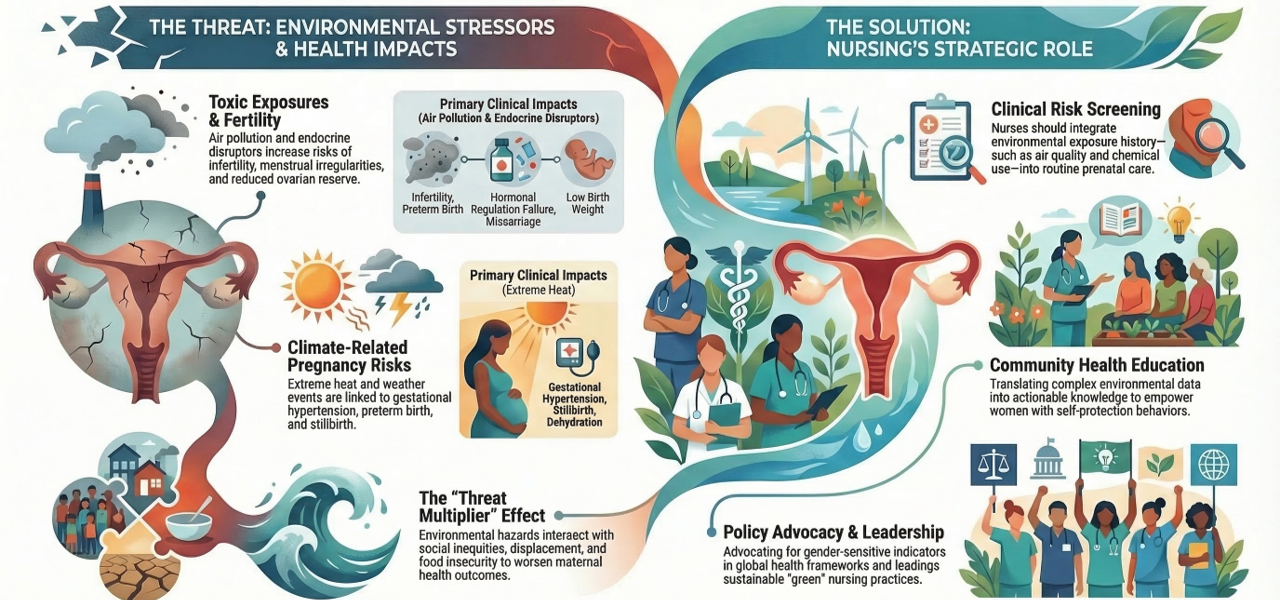
To synthesize the main arguments presented in this review, Figure 1 illustrates the major environmental stressors affecting women’s reproductive health and highlights the nursing-led response across clinical, community, and policy domains.
Figure 1. Climate Change and Reproductive Health: The Nursing-Led Response
Note. Developed by the authors; artificial intelligence was used only to support visual design, and the intellectual content was created and verified by the authors.
Conclusion
Current policies remain fragmented across the health–environment–gender axis.Climate change and environmental degradation pose multidimensional threats to women’s reproductive health. These threats extend beyond biological mechanisms; they are also deepened by social inequities including poverty, displacement, and unequal access to care. Exposure to fine particulate matter, chemical pollutants, and extreme weather events has been associated with a wide range of adverse outcomes from impaired fertility and increased hypertensive disorders of pregnancy to preterm birth and neonatal morbidity. When combined with environmental injustice, these effects impose a compounded burden on women’s bodies and lives.
Current policies remain fragmented across the health–environment–gender axis. Environmental policies rarely incorporate reproductive health indicators, while maternal and child health programs seldom monitor environmental exposures in a systematic way. Bridging this gap requires the integration of gender-sensitive, measurable, and accountable indicators into climate adaptation plans, air and chemical quality standards, and disaster preparedness protocols. Protecting women’s reproductive health demands a new paradigm that recognizes environmental integrity as a foundational component of the health infrastructure.
Nursing stands at the forefront of this clinical and policy transformation. The profession’s broad spectrum of competencies from clinical screening and counseling to community education, disaster preparedness, research, and policy advocacy positions nurses as a vital bridge between scientific evidence and practical implementation. Therefore, integrating planetary health competencies into nursing curricula, strengthening the representation of nurses in policy processes, and promoting nurse-led interdisciplinary research are essential for sustainable progress. Developing competency-based educational frameworks that include environmental risk assessment, climate-related reproductive health protection, and community-based environmental health education may further strengthen the capacity of future nurses to respond to emerging planetary health challenges.
Protecting women’s reproductive health demands a new paradigm that recognizes environmental integrity as a foundational component of the health infrastructure. When evidence-based policies, nursing leadership, and equity-oriented practices converge, it becomes possible to mitigate the reproductive impacts of the climate crisis and advance intergenerational justice. This is not only a public health imperative; it is a moral and ethical responsibility.
Authors
Fusun Terzioglu, PhD, RN
Email: fusunterzioglu@aydin.edu.tr
ORCID ID: 0000-0002-4082-7059
Füsun Terzioglu is a Professor of Obstetrics and Gynecology Nursing and currently serves as Vice Rector and Advisor to the Rector at Istanbul Aydın University, İstanbul, Türkiye where she contributes to institutional leadership and strategic development in health and higher education. Her scholarly work focuses on women’s and reproductive health, gynecologic oncology, perinatal palliative care, innovative nursing and midwifery education, and the advancement of leadership and professionalism in nursing. She has authored numerous peer-reviewed publications and supervised many theses in these fields. Professor Terzioglu is actively involved in national and international research projects, quality and accreditation initiatives, and is widely recognized for her leadership in mentoring early-career nurses and midwives while promoting the integration of evidence-based practice and policy into women’s health services in Türkiye.
Fatma Uslu-Sahan, PhD, RN
Email: fatma.uslu@hacettepe.edu.tr
ORCID ID: 0000-0001-6451-296X
Fatma Uslu-Sahan is an Associate Professor at Hacettepe University Faculty of Nursing, Department of Obstetrics and Gynecology Nursing, Ankara, Türkiye. Her scholarly work focuses on women’s health, gynecologic oncology, pregnancy well-being, and simulation-based nursing education. She has authored numerous peer-reviewed publications, both national and international, and has contributed to several funded research projects. Dr. Uslu-Sahan also holds academic leadership roles and mentors undergraduate and graduate nursing students.
Aslı Er-Korucu, PhD, RN
Email: akorucu@ankara.edu.tr
ORCID ID: 0000-0003-0274-4823
Aslı Er-Korucu is an Assistant Professor in the Department of Midwifery at Ankara University Faculty of Nursing, Ankara, Türkiye, where she teaches courses on maternal health, breastfeeding, reproductive health, and evidence-based midwifery. Her research focuses on breastfeeding, maternal health literacy, environmental health, women’s reproductive health, and perinatal mental well-being. Dr. Er-Korucu has authored numerous peer-reviewed articles and serves as a reviewer for several international journals in nursing and women’s health. Dr. Er-Korucu also holds academic leadership roles and mentors undergraduate and graduate midwifery students.
References
Abdelnour, S. A., Swelum, A. A., Sindi, R. A., Barkat, R. A., Khalifa, N. E., Amin, A. A., El-Raghi, A. A., Tufarelli, V., Losacco, C., & Abd El-Hack, M. E. (2022). Responses of sperm mitochondria functionality in animals to thermal stress: The mitigating effects of dietary natural antioxidants. Reproduction in Domestic Animals = Zuchthygiene, 57(10), 1101–1112. https://doi.org/10.1111/rda.14193
Agency for Toxic Substances and Disease Registry (ATSDR). (2024). Taking an exposure history. Retrieved from: https://www.atsdr.cdc.gov/environmental-medicine/hcp/csemtakinganexposurehistory/index.html
Agency for Toxic Substances and Disease Registry (ATSDR). (2025). Prenatal Assessment of Environmental Risk (PAER). Retrieved from: https://www.atsdr.cdc.gov/environmental-medicine/infographics/index.html
Al-Saleh, I., Shinwari, N., Mashhour, A., & Rabah, A. (2014). Birth outcome measures and maternal exposure to heavy metals (lead, cadmium and mercury) in Saudi Arabian population. International Journal of Hygiene and Environmental Health, 217(2–3), 205–218. https://doi.org/10.1016/j.ijheh.2013.04.009
Anåker, A., Nilsson, M., Holmner, Å., & Elf, M. (2015). Nurses’ perceptions of climate and environmental issues: a qualitative study. Journal of Advanced Nursing, 71(8), 1883–1891. https://doi.org/10.1111/jan.12655
Anjum, G., & Aziz, M. (2025). Climate change and gendered vulnerability: A systematic review of women’s health. Women’s Health (London, England), 21, 17455057251323644. https://doi.org/10.1177/17455057251323645
Arunda, M. O., Sorcher, R., Canabarro, A. P. F., Svallfors, S., Endler, M., Gemzell-Danielsson, K., Kågesten, A., Ali, M., Bahamondes, L., Barreix, M., Chou, D., Gonsalves, L., Johnston, H. B., Kiarie, J., Kim, C. R., Narasimhan, M., Pallitto, C., Shah, M. G., Say, L., … Brizuela, V. (2024). Climate change and sexual and reproductive health and rights research in low-income and middle-income countries: a scoping review. BMJ Public Health, 2(2), e001090. https://doi.org/10.1136/bmjph-2024-001090
Azhar, U., Murtaza, M., Arif, M., Munir, H. M. S., Sagir, M., & Tahir, M. B. (2024). Chapter Ten - Afforestation and agriculture effect on climate change (M. R. Rahimpour, M. A. Makarem, & M. B. T.-A. and T. D. in G. G. E. Meshksar Capture and Conversion (eds.); pp. 185–210). Elsevier. https://doi.org/10.1016/B978-0-443-19066-7.00013-8
Bai, W., Li, Y., Niu, Y., Ding, Y., Yu, X., Zhu, B., Duan, R., Duan, H., Kou, C., Li, Y., & Sun, Z. (2020). Association between ambient air pollution and pregnancy complications: A systematic review and meta-analysis of cohort studies. Environmental Research, 185, 109471. https://doi.org/10.1016/j.envres.2020.109471
Begum, M. R., Ehsan, M., & Ehsan, N. (2022). Impact of Environmental Pollution on Female Reproduction. Fertility & Reproduction, 04(02), 49–57. https://doi.org/10.1142/S266131822230001X
Bell, Z., Nguyen, G., Andreae, G., Scott, S., Sermin-Reed, L., Lake, A. A., & Heslehurst, N. (2024). Associations between food insecurity in high-income countries and pregnancy outcomes: A systematic review and meta-analysis. PLoS Medicine, 21(9), e1004450. https://doi.org/10.1371/journal.pmed.1004450
Celeghini, E. C. C., Nascimento, F. B., Bozzi, A. da R., Oliveros, L. N. G., & Arruda, R. P. de. (2024). Bovine testicular heat stress: from climate change to effects on microRNA profile. Animal Reproduction Science, 270, 1–11. https://doi.org/10.1016/j.anireprosci.2024.107620
Centers for Disease Control and Prevention (CDC). (2025). National report on human exposure to environmental chemicals. Retrieved from: https://www.cdc.gov/environmental-exposure-report/
Chersich, M. F., Pham, M. D., Areal, A., Haghighi, M. M., Manyuchi, A., Swift, C. P., Wernecke, B., Robinson, M., Hetem, R., Boeckmann, M., & Hajat, S. (2020). Associations between high temperatures in pregnancy and risk of preterm birth, low birth weight, and stillbirths: systematic review and meta-analysis. BMJ (Clinical Research Ed.), 371, m3811. https://doi.org/10.1136/bmj.m3811
Dağlı, E., Reyhan, F. A., & Kırca, A. Ş. (2024). Midwives’ views about the effects of climate change on maternal and child health: A qualitative study. Women and Birth : Journal of the Australian College of Midwives, 37(2), 451–457. https://doi.org/10.1016/j.wombi.2024.02.001
Delnat, C. C. (2025). A systematic review of climate change content integration in nursing curricula. Journal of Nursing Education, 64(4), 227-234. https://doi.org/10.3928/01484834-20241125-02
De Silva, D. A., Thoma, M. E., Anderson, E. A., & Kim, J. (2022). Infant Sex-Specific Associations between Prenatal Food Insecurity and Low Birthweight: A Multistate Analysis. The Journal of Nutrition, 152(6), 1538–1548. https://doi.org/10.1093/jn/nxac062
Desye, B., Berihun, G., Geto, A. K., Berhanu, L., & Daba, C. (2024). Exposure to ambient air pollutions and its association with adverse birth outcomes: a systematic review and meta-analysis of epidemiological studies. Frontiers in Public Health, 12, 1488028. https://doi.org/10.3389/fpubh.2024.1488028
Dogan, E. I. K., Ekiz, P., & Meyer, C. G. (2025). Planetary health education for nursing students: A scoping review. Nurse Education Today, 153, 106812. https://doi.org/10.1016/j.nedt.2025.106812
Ediz, Ç., & Uzun, S. (2025). The perspectives of nurses, as prominent advocates in sustainability, on the global climate crises and its impact on mental health. Journal of Advanced Nursing, 81(12), 8266-8280. https://doi.org/10.1111/jan.16131
European Commission. (2019). The European Green Deal (COM(2019) 640 final). Brussels: European Commission. Retrieved from: https://commission.europa.eu/publications/communication-european-green-deal_en
European Observatory on Health Systems and Policies & World Health Organization Regional Office for Europe. (2025). Green skills for a sustainable future: Building a climate-smart health and care workforce in the European Union (Policy Brief No. 70). Copenhagen: WHO Regional Office for Europe. Retrieved from: https://eurohealthobservatory.who.int/publications/i/green-skills-for-a-sustainable-future-building-a-climate-smart-health-and-care-workforce-in-the-european-union
European Parliament, & C. of the E. U. (2008). Directive 2008/50/EC on ambient air quality and cleaner air for Europe. Official Journal of the European Union, L 152, 1–44. https://www.ecolex.org/details/legislation/directive-200850ec-of-the-european-parliament-and-of-the-council-on-ambient-air-quality-and-cleaner-air-for-europe-lex-faoc080016/?type=legislation&xsubjects=Energy&page=170
Fayazi, M., Rahmani, R., & Rahmany Bilandi, R. (2020). The relationship between air pollution and preeclampsia with gestational hypertension; A systematic review. The Iranian Journal of Obstetrics, Gynecology and Infertility, 23(9), 95–107. https://doi.org/10.22038/ijogi.2020.17394
Gautam, R., Priyadarshini, E., Patel, A. K., & Arora, T. (2024). Assessing the impact and mechanisms of environmental pollutants (heavy metals and pesticides) on the male reproductive system: a comprehensive review. Journal of Environmental Science and Health. Part C, Toxicology and Carcinogenesis, 42(2), 126–153. https://doi.org/10.1080/26896583.2024.2302738
Giudice, L. C., Llamas-Clark, E. F., DeNicola, N., Pandipati, S., Zlatnik, M. G., Decena, D. C. D., Woodruff, T. J., & Conry, J. A. (2021). Climate change, women’s health, and the role of obstetricians and gynecologists in leadership. International Journal of Gynaecology and Obstetrics, 155(3), 345–356. https://doi.org/10.1002/ijgo.13958
Gundacker, C., & Hengstschläger, M. (2012). The role of the placenta in fetal exposure to heavy metals. Wiener Medizinische Wochenschrift (1946), 162(9–10), 201–206. https://doi.org/10.1007/s10354-012-0074-3
Güney, S., Sarıköse, S., Sengul, T., & Kaya, N. (2026). Academics' perspectives on climate change in nursing and midwifery education: A mixed-methods study. Nurse Education Today, 160, 106986. https://doi.org/10.1016/j.nedt.2026.106986
Hu, H., Ha, S., Roth, J., Kearney, G., Talbott, E. O., & Xu, X. (2014). Ambient air pollution and hypertensive disorders of pregnancy: A systematic review and meta-analysis. Atmospheric Environment (Oxford, England : 1994), 97, 336–345. https://doi.org/10.1016/j.atmosenv.2014.08.027
Hubbard, G., Daas, C. den, Johnston, M., Murchie, P., Thompson, C. W., & Dixon, D. (2021). Are rurality, area deprivation, access to outside space, and green space associated with mental health during the COVID-19 pandemic? A cross sectional study (CHARIS-E). International Journal of Environmental Research and Public Health, 18(8). https://doi.org/10.3390/ijerph18083869
International Union for Conservation of Nature (IUCN). (2021). Gender and national climate planning: Gender integration in the revision process of nationally determined contributions. Retrieved from: https://portals.iucn.org/library/sites/library/files/documents/2021-043-En.pdf
Işık, M., Akbaş, P., & Özkan Şat, S. (2025). The psychological impacts of climate change on pregnant women in Türkiye. Women and Birth : Journal of the Australian College of Midwives, 38(6), 102111. https://doi.org/10.1016/j.wombi.2025.102111
Kent, S., Jordan, A., Ingram-Martin, P., Stewart, D., & Filise, M. I. (2025). Unheard voices: The critical role of nurses and midwives in climate resilience and disaster preparedness in Small Island Developing States. Nursing Outlook, 73(5), 102530. https://doi.org/10.1016/j.outlook.2025.102530
Kim, D., Chen, Z., Zhou, L.-F., & Huang, S.-X. (2018). Air pollutants and early origins of respiratory diseases. Chronic Diseases and Translational Medicine, 4(2), 75–94. https://doi.org/10.1016/j.cdtm.2018.03.003
Korten, I., Ramsey, K., & Latzin, P. (2017). Air pollution during pregnancy and lung development in the child. Paediatric Respiratory Reviews, 21, 38–46. https://doi.org/10.1016/j.prrv.2016.08.008
Langer, A., Meleis, A., Knaul, F. M., Atun, R., Aran, M., Arreola-Ornelas, H., Bhutta, Z. A., Binagwaho, A., Bonita, R., Caglia, J. M., Claeson, M., Davies, J., Donnay, F. A., Gausman, J. M., Glickman, C., Kearns, A. D., Kendall, T., Lozano, R., Seboni, N., … Frenk, J. (2015). Women and Health: the key for sustainable development. Lancet (London, England), 386(9999), 1165–1210. https://doi.org/10.1016/S0140-6736(15)60497-4
LaPointe, S., Lee, J. C., Nagy, Z. P., Shapiro, D. B., Chang, H. H., Wang, Y., Russell, A. G., Hipp, H. S., & Gaskins, A. J. (2024). Ambient traffic related air pollution in relation to ovarian reserve and oocyte quality in young, healthy oocyte donors. Environment International, 183, 108382. https://doi.org/10.1016/j.envint.2023.108382
LeClair, J. M., Luebke, J. M., Gingerich, S., Oakley, L. D., Timko Olson, E. R., & Potter, T. M. (2024). The future of nursing for planetary health ıs today: Essential transitions for education and research. Quality Advancement in Nursing Education - Avancées En Formation Infirmière, 10(4 SE-Article), 1–17. https://doi.org/10.17483/2368-6669.1464
Liu, R., DeSerisy, M., Fox, N. A., Herbstman, J. B., Rauh, V. A., Beebe, B., & Margolis, A. E. (2022). Prenatal exposure to air pollution and maternal stress predict infant individual differences in reactivity and regulation and socioemotional development. Journal of Child Psychology and Psychiatry, and Allied Disciplines, 63(11), 1359–1367. https://doi.org/10.1111/jcpp.13581
Lo, Y.-C., Jang, Y.-C., Chuang, S.-H., Cheng, S.-J., Kuo, Y.-J., Chang, C.-H., & Chen, Y.-P. (2025). Long-term exposure to ambient air pollutants and female infertility risk: a population-based cohort study in Taiwan. BMC Public Health, 25(1), 3162. https://doi.org/10.1186/s12889-025-24213-x
Melody, S., Wills, K., Knibbs, L. D., Ford, J., Venn, A., & Johnston, F. (2020). Adverse birth outcomes in Victoria, Australia in association with maternal exposure to low levels of ambient air pollution. Environmental Research, 188, 109784. https://doi.org/10.1016/j.envres.2020.109784
Mishra, S., Bhagat, D., & Borah, S. (2024). Ergonomic studies on occupational health of women workers ınvolved in agricultural ındustries: A systematic review. Research on World Agricultural Economy, 5(4 SE-Review Article), 110–127. https://doi.org/10.36956/rwae.v5i4.1207
Ngowi, A., Mrema, E., & Kishinhi, S. (2016). pesticide health and safety challenges facing ınformal sector workers: A case of small-scale agricultural workers in Tanzania. New Solutions : A Journal of Environmental and Occupational Health Policy : NS, 26(2), 220–240. https://doi.org/10.1177/1048291116650262
OECD, O. for E. C. and D. (2021). Gender and the environment: Building evidence and policies to achieve the SDGs. OECD Publishing. Retrieved from: https://www.oecd.org/content/dam/oecd/en/publications/reports/2021/05/gender-and-the-environment_016cfd67/3d32ca39-en.pdf
Osman, Y. M., Shaban, M. M., & Shaban, M. (2025). Shaping a sustainable future: Climate-related stress and violence among women of reproductive age: A systematic review. Women and Birth, 38(6), 102092. https://doi.org/https://doi.org/10.1016/j.wombi.2025.102092
Ozkemahli, G., Balci Ozyurt, A., Erkekoglu, P., Zeybek, N. D., Yersal, N., & Kocer-Gumusel, B. (2022). The effects of prenatal and lactational bisphenol A and/or di(2-ethylhexyl) phthalate exposure on female reproductive system. Toxicology Mechanisms and Methods, 32(8), 597–605. https://doi.org/10.1080/15376516.2022.2057265
Parums, D. V. (2024). A review of the ıncreasing global ımpact of climate change on human health and approaches to medical preparedness. Medical Science Monitor : International Medical Journal of Experimental and Clinical Research, 30, e945763. https://doi.org/10.12659/MSM.945763
Pavlova, S. A., Plokhotnikova, A. I., Sarlova, A. B., Katsyna, A. R., & Troian, N. A. (2024). Impact of climate change, environmental pollution, and nutrition on women’s reproductive health. V.F.Snegirev Archives of Obstetrics and Gynecology, 11(3), 245–254. https://doi.org/DOI: 10.17816/aog627079
Praserttai, C., Tanthanapanyakorn, P., Khantikulanon, N., Mungkhunthod, S., & Maoon, K. (2025). Health literacy and associated factors ınfluencing pesticide protective behaviors among cassava farmers in an Eastern Thailand Province: A cross-sectional study. Pacific Rim International Journal of Nursing Research, 29(4 SE-Original paper), 892–907. https://doi.org/10.60099/prijnr.2025.273615
Quintero Santofimio, V., Amaral, A. F. S., & Feary, J. (2024). Occupational exposures in low- and middle-income countries: A scoping review. PLOS Global Public Health, 4(11), e0003888. https://doi.org/10.1371/journal.pgph.0003888
Rattan, S., Zhou, C., Chiang, C., Mahalingam, S., Brehm, E., & Flaws, J. A. (2017). Exposure to endocrine disruptors during adulthood: consequences for female fertility. The Journal of Endocrinology, 233(3), R109–R129. https://doi.org/10.1530/JOE-17-0023
Republic of Turkey Ministry of Environment and Urbanization. (2012). Turkey’s climate change action plan (2011–2023). Ankara: Ministry of Environment and Urbanization. Retrieved from: https://policy.asiapacificenergy.org/sites/default/files/National Climate Change Action Plan 2011-2023.pdf
Republic of Turkey Ministry of Environment, U. and C. C. (2023). Türkiye Cumhuriyeti ulusal katkı beyanı (Nationally determined contribution of the Republic of Turkey). Ankara: Ministry of Environment, Urbanization and Climate Change. Retrieved from: https://unfccc.int/sites/default/files/NDC/2023-04/TÜRKİYE_UPDATED 1st NDC_EN.pdf
Runkle, J., Flocks, J., Economos, J., Tovar-Aguilar, J. A., & McCauley, L. (2014). Occupational risks and pregnancy and infant health outcomes in Florida farmworkers. International Journal of Environmental Research and Public Health, 11(8), 7820–7840. https://doi.org/10.3390/ijerph110807820
Safajou, F., Nahidi, F., & Ahmadi, F. (2024). Reproductive health challenges during a flood: A qualitative study. Nursing Open, 11(1), e2044. https://doi.org/10.1002/nop2.2044
Sánchez Sauco, M. F., Gómez Carrillo, J., Pernas Barahona, A., & Ortega García, J. A. (2020). Enfermería Medioambiental: recuperando el vínculo con la salud reproductiva. Cultura de Los Cuidados, 0(58 SE-Teoría y métodos enfermeros), 296–303. https://doi.org/10.14198/cuid.2020.58.24
Segal, T. R., & Giudice, L. C. (2022). Systematic review of climate change effects on reproductive health. Fertility and Sterility, 118(2), 215–223. https://doi.org/10.1016/j.fertnstert.2022.06.005
Shelby, L. A. (2024). Developing a green nursing practice in a profession that contributes to climate change: One nurse’s journey. AACN Advanced Critical Care, 35(4), 310–319. https://doi.org/10.4037/aacnacc2024804
Shih, Y.-H., Chen, H. Y., Christensen, K., Handler, A., Turyk, M. E., & Argos, M. (2021). Prenatal exposure to multiple metals and birth outcomes: An observational study within the National Children’s Study cohort. Environment International, 147, 106373. https://doi.org/10.1016/j.envint.2020.106373
Temmerman, M., Peeters, E., Delacroix, C., Arunda, M., Khalid, S., Hanson, C., & Ojong, S. A. (2025). The impact of implementing the women’s reproductive rights agenda on climate change. Frontiers in Global Women’s Health, 6, 1594066. https://doi.org/10.3389/fgwh.2025.1594066
UNICEF Pacific, World Health Organization, Secretariat of the Pacific Community, & United Nations Population Fund. (2025). WHO, SPC, UNFPA, and UNICEF in the Pacific calls for urgent action to save mothers and newborns. UNICEF Pacific. Retrieved from: https://www.unicef.org/pacificislands/press-releases/who-spc-unfpa-and-unicef-pacific-calls-urgent-action-save-mothers-and-newborns
United Nations. (2015). Transforming our world: The 2030 agenda for sustainable development. New York: United Nations. Retrieved from: https://sdgs.un.org/2030agenda
Valentine-Maher, S. K., Butterfield, P. G., & Laustsen, G. (2018). Environmental health: advancing emancipatory policies for the common good. ANS. Advances in Nursing Science, 41(1), 57–69. https://doi.org/10.1097/ANS.0000000000000194
Vallée, A., Ceccaldi, P.-F., Carbonnel, M., Feki, A., & Ayoubi, J.-M. (2024). Pollution and endometriosis: A deep dive into the environmental impacts on women’s health. BJOG : An International Journal of Obstetrics and Gynaecology, 131(4), 401–414. https://doi.org/10.1111/1471-0528.17687
Ward, A., Charalambous, J., Antoniou, C., East, L., Moroney, T., & Levett-Jones, T. (2025). Planetary health and nursing: Embedding values into standards, behaviours, and education. Nurse Education Today, 153, 106806. https://doi.org/10.1016/j.nedt.2025.106806
Wdowiak, A., Wdowiak, E., Bojar, I., & Bakalczuk, G. (2018). Wpływ zanieczyszczeń powietrza na rozród człowieka. Advances in Hygiene & Experimental Medicine/Postepy Higieny i Medycyny Doswiadczalnej, 72.
Weaver, E. B., Gad, L., & Zota, A. R. (2023). Climate change as a threat multiplier to environmental reproductive justice. Seminars in Perinatology, 47(8), 151843. https://doi.org/10.1016/j.semperi.2023.151843
World Health Organization. (2020). WHO global strategy on health, environment and climate change: The transformation needed to improve lives and well-being sustainably through healthy environments. Geneva: WHO. Retrieved from: https://iris.who.int/server/api/core/bitstreams/4b347df4-9bae-49be-b516-84004d46b58e/content
Wright, M. L., Drake, D., Link, D. G., & Berg, J. A. (2023). Climate change and the adverse impact on the health and well-being of women and girls from the Women’s Health Expert Panel of the American Academy of Nursing. Nursing Outlook, 71(2), 101919. https://doi.org/10.1016/j.outlook.2023.101919
Xu, J., Xu, H., Zhao, X., Guo, Z., Zhao, S., & Xu, Q. (2025). Association between high ambient temperature and spontaneous abortion: A systematic review and meta-analysis. Ecotoxicology and Environmental Safety, 297, 118234. https://doi.org/10.1016/j.ecoenv.2025.118234
Yi, L., Hart, J. E., Straczkiewicz, M., Karas, M., Wilt, G. E., Hu, C. R., Librett, R., Laden, F., Chavarro, J. E., Onnela, J.-P., & James, P. (2024). Measuring environmental and behavioral drivers of chronic diseases using smartphone-based digital phenotyping: Intensive longitudinal observational mHealth substudy embedded in two prospective cohorts of adults. JMIR Public Health and Surveillance, 10, e55170. https://doi.org/10.2196/55170
Yorifuji, T., Kashima, S., Higa Diez, M., Kado, Y., Sanada, S., & Doi, H. (2016). Prenatal Exposure to Traffic-related Air Pollution and Child Behavioral Development Milestone Delays in Japan. Epidemiology (Cambridge, Mass.), 27(1), 57–65. https://doi.org/10.1097/EDE.0000000000000361
Zangerl, K. E., Hoernke, K., Andreas, M., Dalglish, S. L., Kelman, I., Nilsson, M., Rockloev, J., Bärnighausen, T., & McMahon, S. A. (2024). Child health prioritisation in national adaptation policies on climate change: a policy document analysis across 160 countries. The Lancet Child & Adolescent Health, 8(7), 532–544. https://doi.org/10.1016/S2352-4642(24)00084-1


