




Climate change, biodiversity loss and ecological degradation represent some of the most significant threats to human health in the twenty-first century. Healthcare systems are both responders to and contributors to these crises, accounting for an estimated 4–5% of global greenhouse gas emissions. Nurses and midwives, representing nearly 60% of the global health workforce, are uniquely positioned to lead the transition toward sustainable healthcare and planetary health. In this article I explore the role of nurses and midwives in advancing planetary health in the United Kingdom, focusing on policy frameworks, implementation in clinical practice, and implications for research and education. Drawing on examples from the UK healthcare system and international sustainability initiatives, the article highlights approaches, such as sustainable clinical practice, value-based healthcare, and sustainable quality improvement, that can simultaneously improve health outcomes, reduce environmental impact, and address health inequalities. The discussion argues that embedding planetary health approaches into nursing and midwifery practice, policy, and professional education is essential to build resilient health systems capable of responding abd adapting to climate change and ecological disruption. Nurses and midwives must be supported as leaders of sustainable healthcare transformation to safeguard both human and planetary health.
Key Words: Planetary health; sustainable healthcare; climate change; nursing and midwifery leadership; sustainable quality improvement; health policy
Climate change, biodiversity loss, and ecological degradation are increasingly recognised as the most significant threats to global public health (Intergovernmental Panel [IPCC], 2023; World Health Organization [WHO], 2021a ). Rising temperatures, extreme weather events, air pollution, and changing patterns of infectious disease are already affecting populations worldwide (IPCC, 2023; WHO, 2021a ). These environmental disruptions intersect with social and economic determinants of health, amplifying health inequalities and placing additional strain on healthcare systems (Romanello et al., 2023; Marmot et al., 2020).
...paradoxically, healthcare systems themselves contribute significantly to environmental harm.
Healthcare exists to protect and improve human health. However, paradoxically, healthcare systems themselves contribute significantly to environmental harm. Globally, healthcare accounts for approximately 4.4% of greenhouse gas emissions through energy use, procurement, pharmaceuticals, waste management, and transport (Health Care Without Harm, 2019; Lenzen et al., 2020). Addressing this contradiction requires a fundamental transformation in how healthcare is designed and delivered (Health Care Without Harm, 2019).
Health in the Context of Planetary Crisis
This framework recognises that the health of human populations is inseparable from the health of natural systems...
The concept of planetary health provides an important framework for understanding these interconnected challenges. Planetary health has been defined as “the health of human civilisation and the state of the natural systems on which it depends” (Whitmee et al., 2015, p.1978). This framework recognises that the health of human populations is inseparable from the health of natural systems; as ecosystems deteriorate, the capacity to sustain human wellbeing declines (Whitmee et al., 2015; Myers, 2017).
Nurses and midwives are uniquely positioned to respond to the significant challenges that climate change poses to human health. Representing the largest professional group within healthcare, with more than 29 million nurses and over two million midwives worldwide, the profession is embedded across hospitals, community settings, public health systems, and policy environments (International Council of Nurses, 2021; WHO et al., 2021). Through clinical care, health promotion, education, and leadership, nurses and midwives have a powerful capacity to influence patient behaviour, healthcare practices, and organisational culture (Kurth, 2017; Rosa et al., 2019).
Sustainable healthcare seeks to maximise health outcomes while minimising environmental impact and resource use
Increasingly, healthcare professionals are recognising that sustainability must be integrated into everyday care delivery. Sustainable healthcare seeks to maximise health outcomes while minimising environmental impact and resource use (Mortimer et al., 2018; NHS England, 2020). For nurses and midwives, this transformation aligns closely with professional values of prevention, equity, stewardship, and holistic care (Nursing and Midwifery Council, 2018).
This article explores the roles of nurses and midwives in advancing planetary health within the United Kingdom (UK). Within, I examine the policy landscape for sustainable healthcare, explore practical implementation within clinical practice, and consider implications for research, education, and leadership. While the article focuses on the UK context, the challenges described and the approaches discussed are widely applicable across international health systems. The interconnected nature of climate change, health inequalities, and healthcare delivery means lessons from the UK are transferable and relevant to all global audiences.
Policy Landscape for Sustainable Healthcare in the United Kingdom
The United Kingdom has emerged as an international leader in embedding sustainability within healthcare policy and system transformation.
The United Kingdom has emerged as an international leader in embedding sustainability within healthcare policy and system transformation. In 2020, NHS England committed to becoming the world’s first net-zero national health system through the publication of Delivering a Net Zero National Health Service, which outlines a comprehensive strategy for reducing greenhouse gas emissions across healthcare operations and supply chains (NHS England, 2020). The strategy establishes ambitious targets to achieve net-zero emissions from NHS operational activities by 2040 and from the wider supply chain by 2045, recognising that healthcare procurement accounts for a substantial proportion of the sector’s carbon footprint (NHS England, 2020; Tennison et al., 2021).
This policy framework acknowledges that climate change presents significant risks to public health. Rising temperatures and extreme weather events have been associated with increased cardiovascular and respiratory mortality, while air pollution contributes to chronic disease and premature death (WHO, 2021a). In addition, climate-related displacement, food insecurity, and environmental degradation can exacerbate existing health inequalities and strain healthcare systems (IPCC, 2023). Consequently, reducing healthcare emissions is increasingly recognised not only as an environmental responsibility but also as a critical strategy for protecting population health (Tennison et al., 2021).
The UK policy context is also shaped by international frameworks that recognise the interdependence between environmental sustainability and human health.
To support the implementation of this agenda, several national initiatives have been developed. The Greener NHS Programme coordinates sustainability efforts across NHS organisations, focusing on areas such as sustainable procurement, energy efficiency, low-carbon models of care, and workforce engagement (NHS England, 2022). As part of this programme, healthcare organisations are required to develop organisational Green Plans, which set out strategies to reduce emissions, improve environmental performance, and enhance climate resilience within healthcare services (NHS England, 2022). These plans typically include measures such as improving the energy efficiency of healthcare estates, reducing waste, promoting low-carbon travel, and embedding sustainable procurement practices.
The UK policy context is also shaped by international frameworks that recognise the interdependence between environmental sustainability and human health. The UN Sustainable Development Goals provide a global framework for sustainable development, highlighting the interconnected nature of health, environmental protection, and social equity (UN, 2015). Goals relating to health and wellbeing (SDG 3), climate action (SDG 13), and sustainable cities and communities (SDG 11) are particularly relevant to healthcare systems and have informed national sustainability strategies across the health sector (UN, 2015).
Professional regulation also plays an important role in shaping sustainable healthcare practice. The UK Nursing and Midwifery Council emphasises in its professional code that nurses and midwives have a responsibility to promote health, prevent illness, and use resources effectively in the delivery of care (Nursing and Midwifery Council, 2018). These principles align closely with the goals of sustainable healthcare, which seek to maximise health outcomes while minimising environmental harm and resource consumption.
Collectively, these national and international policy frameworks create a supportive environment for integrating sustainability into healthcare practice. However, achieving meaningful progress requires more than policy commitments alone. Translating sustainability strategies into clinical practice depends on the active engagement of healthcare professionals across all levels of the system, particularly nurses and midwives who play a central role in the delivery, organisation, and improvement of healthcare services.
Implementing Sustainable Healthcare in Clinical Practice
While policy sets direction, the real transformation toward sustainable healthcare occurs in everyday clinical practice. Nurses and midwives are central to this implementation because they make countless decisions each day that influence resource use, patient care pathways, and organisational behaviour.
While policy sets direction, the real transformation toward sustainable healthcare occurs in everyday clinical practice.
Sustainable healthcare can be understood through four key principles: prevention, patient self-care, lean pathways, and low-carbon alternatives. These principles, illustrated in Figure 1, emphasise improving health outcomes while minimising environmental impact.
Figure 1. The Four Principles of Sustainable Practice
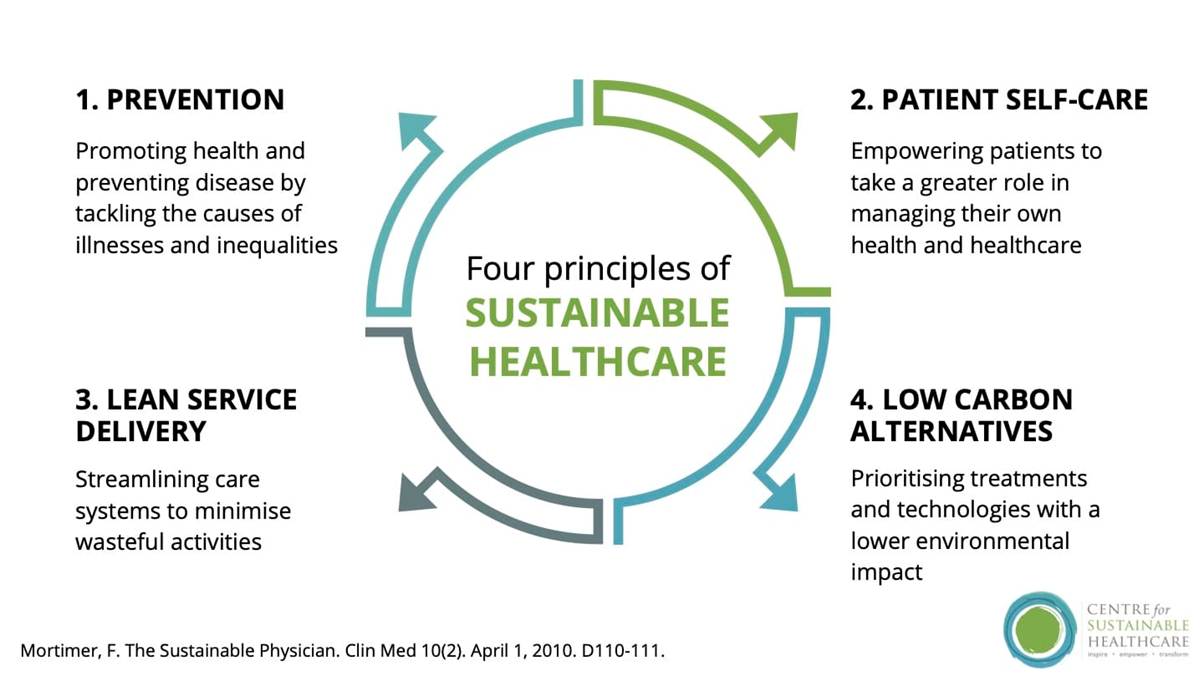
Mortimer, F. (2010). Reprinted with permission from the Centre for Sustainable Healthcare. Available: https://sustainablehealthcare.org.uk/about/our-story/the-principles-of-sustainable-healthcare/
Prevention is the most effective sustainability strategy in healthcare. Preventing illness reduces the need for resource-intensive medical interventions. Nurses and midwives play a critical role in health promotion activities such as vaccination programmes, smoking cessation support, nutrition education, and chronic disease management.
Prevention is the most effective sustainability strategy in healthcare.
Supporting patient self-care also contributes to sustainability. When individuals are empowered to manage their own health conditions effectively, unnecessary hospital admissions and medical interventions can be avoided. Community nursing and midwifery services are particularly important in supporting self-management and preventive care.
Lean healthcare pathways represent another key sustainability strategy. Eliminating unnecessary tests, procedures, and interventions reduces waste, saves resources, and improves the patient experience. Research has demonstrated that significant variation exists in healthcare practice, often reflecting inefficiencies rather than differences in patient need (Getting It Right First Time, 2026). Finally, selecting lower-carbon clinical alternatives can significantly reduce environmental impact. For example, some inhalers used in respiratory medicine contain hydrofluorocarbon propellants with a high carbon footprint. Where clinically appropriate, switching patients to dry powder inhalers can substantially reduce carbon emissions while maintaining effective treatment (Wilkinson & Woodcock, 2022).
Similarly, telemedicine and digital consultations can reduce the need for patient travel and physical infrastructure. The rapid expansion of virtual care during the COVID-19 pandemic demonstrated the potential for digital health solutions to support more sustainable models of care.
Waste Reduction and Sustainable Procurement
Healthcare generates large volumes of waste, much of which is incorrectly classified as clinical waste and therefore incinerated. Proper waste segregation and recycling can significantly reduce environmental impact and costs. Nurses and midwives often lead waste reduction initiatives within clinical teams. These may include improving recycling systems, reducing single-use items where clinically safe, and promoting reusable alternatives.
Nurses and midwives often lead waste reduction initiatives within clinical teams.
Sustainable procurement is another important area of action. Healthcare supply chains account for a substantial proportion of the sector’s carbon footprint. Choosing products with lower environmental impact, reduced packaging, and ethical supply chains can contribute to significant emissions reductions.
Sustainable Quality Improvement
Sustainable Quality Improvement (SusQI) has emerged in response to the growing recognition that healthcare systems are both contributors to, and affected by, climate change and wider ecological degradation. Traditional quality improvement (QI) methodologies, such as Plan–Do–Study–Act (PDSA) cycles—have historically focused on enhancing clinical effectiveness, patient safety, and efficiency. However, they have not routinely accounted for the broader environmental and social consequences of care delivery (Mortimer et al., 2018).
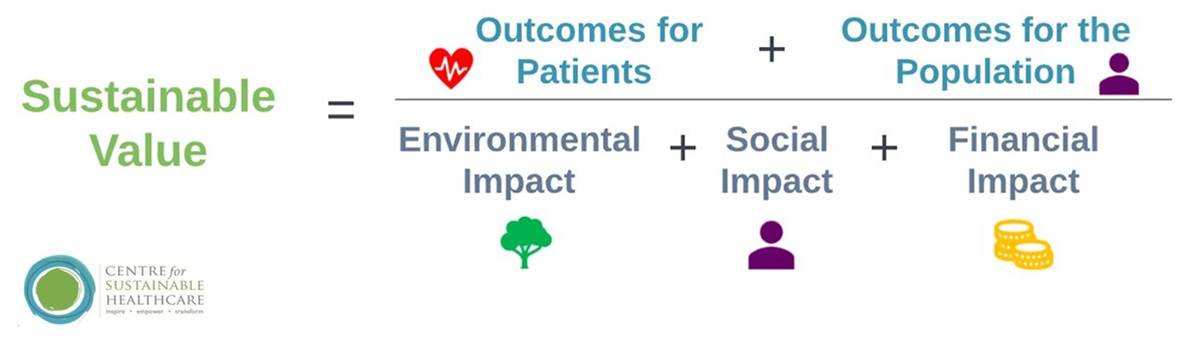
SusQI was developed by the Centre for Sustainable Healthcare to address this gap. It builds on established QI approaches by explicitly integrating sustainability into the design, implementation, and evaluation of healthcare improvement initiatives. The methodology is underpinned by the concept of the “triple bottom line,” considering:
- Environmental impact (e.g. carbon emissions, waste, resource use)
- Social impact (e.g. health equity, patient empowerment, staff wellbeing)
- Financial impact (e.g. cost-effectiveness and resource stewardship)
This expanded perspective is operationalised through the Sustainable Value Equation, which encourages clinicians and healthcare teams to maximise health outcomes while minimising environmental harm and ensuring efficient use of resources (Mortimer et al., 2018). See Figure 2 for additional information about the sustainable value equation.
Figure 2. The Sustainable Value Equation
Reprinted with permission from the Centre for Sustainable Healthcare. Available: https://sustainablehealthcare.org.uk/sustainable-quality-improvement-susqi/
...quality improvement and sustainability are not competing priorities but are inherently aligned.
The development of SusQI is closely associated with the work of Frances Mortimer and colleagues, who have been instrumental in advancing the field of sustainable healthcare. Their work emphasises that quality improvement and sustainability are not competing priorities but are inherently aligned. By embedding sustainability into QI, healthcare professionals can deliver care that is both high-quality and resilient in the face of climate and system pressures (Mortimer et al., 2018).
Importantly, SusQI reframes sustainability as a core dimension of quality, rather than an optional or external consideration. It also aligns with the aforementioned four principles of sustainable clinical practice—prevention, patient empowerment, lean pathways, and low-carbon alternatives—providing a practical framework for frontline implementation (Centre for Sustainable Healthcare, 2020).
Projects using SusQI have demonstrated that integrating environmental and social considerations into QI can lead to measurable reductions in carbon emissions, waste, and resource use, while simultaneously improving patient outcomes and staff engagement. This growing body of evidence illustrates that sustainability can be effectively embedded within existing improvement structures, supporting a more holistic and future-oriented model of healthcare delivery.
Planetary Health in Practice: Translating Policy into Clinical Action
In the United Kingdom, nurses and midwives are increasingly translating sustainability concepts into tangible initiatives that improve patient care while reducing environmental impact. Two prominent examples of clinician-led sustainability innovation in the United Kingdom are the Green Nursing Challenge and the Green Maternity Challenge, both led by the Centre for Sustainable Healthcare. These national initiatives support healthcare professionals to lead sustainable healthcare improvements using structured SusQI approaches. The Green Nursing Challenge was launched in 2025 and was delivered in partnership with the Foundation of Nursing Studies and the Queen’s Institute of Community Nursing, empowering nurses to identify environmental impacts within clinical services and design practical improvement projects that simultaneously enhance patient care and reduce environmental harm (Centre for Sustainable Healthcare, 2025).
This approach encourages clinicians to consider the broader impacts of healthcare decisions while maintaining a strong focus on clinical outcomes and patient experience (Mortimer et al., 2018 ). Participating teams in the green challenges were supported through mentoring, workshops, and structured project development to identify opportunities for sustainable clinical practice within their services (Centre for Sustainable Healthcare, 2025).
In the inaugural Green Nursing Challenge programme, six UK nursing teams from across community and secondary care settings implemented sustainability-focused quality improvement projects. These initiatives addressed a wide range of clinical priorities, including reducing unnecessary hospital appointments, improving community-based management of chronic conditions, replacing single-use equipment with reusable alternatives, and optimising treatment pathways to avoid unnecessary interventions. Collectively, these projects were estimated to deliver annual savings of approximately £691,844 alongside reductions of around 77,398 kg of carbon dioxide equivalent emissions, demonstrating how sustainability interventions can deliver simultaneous environmental, financial, and clinical benefits (Centre for Sustainable Healthcare, 2025).
Similarly, the Green Maternity Challenge supported multidisciplinary NHS maternity teams to develop and implement SusQI projects aimed at improving maternity care while reducing environmental impact. Participating teams focused on interventions such as improving antenatal care pathways, strengthening breastfeeding support, reducing avoidable hospital visits, and improving access to services for underserved populations. The programme demonstrated significant environmental and financial impact, with projected annual savings of approximately £860,669 and reductions of around 101,263 kg CO₂e, illustrating the potential for sustainability initiatives to improve patient outcomes, reduce health inequalities, and lower the environmental footprint of maternity services (Centre for Sustainable Healthcare, 2024a).
Another example of planetary health in practice can be seen in paediatric healthcare settings. The Born Green Generation programme at Great Ormond Street Hospital focuses on reducing the environmental impact of healthcare delivery for children and young people. The initiative emphasises reducing single-use plastics, improving waste management, and embedding sustainability awareness across clinical teams.
Healthcare generates significant quantities of plastic waste, much of which is associated with disposable equipment and packaging required for infection control and patient safety. However, increasing attention is being paid to identifying clinically safe alternatives that reduce reliance on single-use plastics. Initiatives such as Born Green Generation aim to identify opportunities to replace disposable materials with reusable options, improve recycling processes, and raise awareness among healthcare staff about the environmental impacts of healthcare practices (Health Care Without Harm, 2023).
...increasing attention is being paid to identifying clinically safe alternatives that reduce reliance on single-use plastics.
Together, initiatives such as the Green Nursing and Maternity Challenges and the Born Green Generation programme demonstrate how planetary health principles can move from theory into practice. These initiatives illustrate the critical role of nurses and midwives in leading sustainable healthcare transformation. By empowering clinicians to implement practical solutions within their own services, such programmes contribute to the development of resilient, environmentally responsible health systems that protect both current and future generations.
Addressing Health Inequalities through Planetary Health
Climate change represents not only an environmental crisis but also a profound social justice challenge. The health consequences of environmental degradation are not experienced equally; rather, they disproportionately affect populations who are already socially or economically disadvantaged. Vulnerable groups including low-income communities, older adults, children, and individuals living with chronic illness are often more exposed to environmental hazards and less able to adapt to climate-related health risks (WHO, 2021a; IPCC, 2023). As a result, climate change has the potential to deepen existing health inequalities and create new patterns of vulnerability across populations.
Environmental determinants of health illustrate how climate and ecological factors intersect with social conditions to influence health outcomes. For example, individuals living in poorly insulated housing are particularly vulnerable to extreme temperatures during heatwaves or cold weather events, increasing risks of cardiovascular and respiratory illness (WHO, 2021b). Similarly, communities exposed to higher levels of air pollution experience elevated rates of respiratory disease, cardiovascular conditions, and premature mortality (Royal College of Physicians, 2018). Climate-related disruptions to food systems also threaten nutritional security, particularly affecting maternal and child health in disadvantaged populations (World Food Programme, 2022).
Environmental determinants of health illustrate how climate and ecological factors intersect with social conditions to influence health outcomes.
Within this context, nurses and midwives play a critical role in addressing health inequities linked to environmental change. As frontline healthcare professionals working closely with patients and communities, they are well positioned to identify environmental health risks, promote preventive health strategies, and advocate for more equitable and sustainable health systems (Whitmee et al., 2015). Through community engagement, patient education, and intersectoral collaboration, nurses and midwives can support initiatives that simultaneously improve environmental sustainability and health equity.
Community-based healthcare programmes provide important examples of this integrated approach. Initiatives such as green social prescribing, promoted through the NHS England Green Social Prescribing Programme, encourage patients to engage in nature-based activities including community gardening, walking groups, conservation volunteering, and outdoor wellbeing programmes (NHS England, 2026). These interventions have been associated with improvements in mental wellbeing, reductions in social isolation, and increased levels of physical activity (Bratman et al., 2019; NHS England, 2026).
A credible initiative supporting nature-based health interventions is the NHS Forest, led by the Centre for Sustainable Healthcare, which supports the creation and protection of green spaces across NHS sites. Since its launch, the NHS Forest programme has supported hundreds of healthcare sites to plant trees, establish therapeutic gardens, and develop biodiverse green spaces for patients, staff, and local communities (Centre for Sustainable Healthcare, 2023). Access to green space has been shown to support mental wellbeing, reduce stress, and contribute to improved recovery and rehabilitation outcomes (Bratman et al., 2019). Initiatives such as the NHS Forest therefore illustrate how healthcare organisations can simultaneously enhance patient wellbeing, support staff resilience, and contribute to biodiversity restoration and climate mitigation.
Beyond individual and community interventions, addressing environmental health inequalities also requires advocacy at the policy level. Nurses and midwives can contribute valuable clinical insights to discussions about urban planning, housing quality, air pollution regulation, and equitable access to green spaces. Healthcare professionals increasingly participate in policy debates related to climate change, recognising that environmental policies often have direct and indirect consequences for population health (Whitmee et al., 2015).
...addressing environmental health inequalities also requires advocacy at the policy level.
By bringing clinical perspectives into environmental policy discussions, nurses and midwives can help ensure that sustainability initiatives prioritise both environmental protection and social equity. In doing so, the profession contributes to a broader planetary health agenda that recognises the interconnected nature of environmental sustainability, public health, and social justice.
Implications for Nursing and Midwifery Practice
Embedding principles of planetary health into healthcare systems requires leadership from nurses and midwives at every level of practice, from frontline clinical care to organisational governance and policy advocacy. As the largest professional group within the global health workforce, nurses and midwives play a critical role in shaping healthcare delivery and influencing health outcomes for individuals, communities, and populations (WHO, 2021b). Their unique position within healthcare systems enables them to integrate sustainability principles into everyday practice while maintaining a strong focus on patient-centered care.
Nurses and midwives can incorporate sustainability into routine decision-making processes. Sustainable clinical practice involves considering the environmental, social, and economic implications of healthcare interventions alongside traditional clinical outcomes. Examples include selecting lower-carbon treatment options where clinically appropriate, reducing unnecessary diagnostic tests and procedures, minimising waste, and promoting preventive health strategies that reduce demand for resource-intensive healthcare services (Mortimer et al., 2018; Tennison et al., 2021). In addition, nurses and midwives play a key role in educating patients about the health co-benefits of sustainable behaviours, such as active travel, healthy and sustainable diets, and reduced exposure to environmental pollutants (Whitmee et al., 2015).
Nurses and midwives can incorporate sustainability into routine decision-making processes.
Leadership within healthcare organisations is also essential for advancing sustainable healthcare. Many hospitals and health systems have established interdisciplinary sustainability or Green Teams to identify opportunities for environmental improvement within clinical services. These groups often focus on initiatives such as waste reduction, energy efficiency, sustainable procurement, and the redesign of care pathways to reduce environmental impact (NHS England, 2022). Nurses and midwives frequently play leading roles within these teams because of their detailed understanding of clinical workflows, patient pathways, and organisational culture. Their ability to engage colleagues and facilitate multidisciplinary collaboration is critical in driving sustainable practice change within complex healthcare environments.
Professional advocacy represents another important dimension of sustainable healthcare leadership. Nurses and midwives are consistently ranked among the most trusted professions globally, a status that provides a powerful platform for raising awareness about the health impacts of climate change and advocating for policies that protect both human and planetary health (Ipsos MORI, 2023; WHO, 2021b). Through engagement with professional bodies, public health campaigns, and policy discussions, nurses and midwives can contribute to shaping environmental and health policy, promoting climate action, and ensuring that sustainability initiatives prioritise health equity and social justice.
Professional advocacy represents another important dimension of sustainable healthcare leadership.
Despite growing recognition of the need for sustainable healthcare, nurses and midwives face significant practical and systemic challenges in implementing environmentally sustainable practices. One of the most persistent tensions relates to the widespread reliance on single-use items. While these products contribute substantially to healthcare waste and carbon emissions, they are often embedded within clinical pathways due to perceived benefits in infection prevention, standardisation, and time efficiency in high-pressure environments (Hayes & Brown, 2025; Royal College of Nursing, 2023). A key barrier to change is the perceived infection risk associated with reusable alternatives, with many clinicians concerned that reducing single-use items could compromise patient safety. However, emerging evidence and guidance from the Infection Prevention Society (IPS) highlight that these risks are often overstated and not consistently supported by current evidence. The IPS has actively worked to dispel myths by emphasising that infection risk is primarily determined by adherence to robust decontamination processes, appropriate use, and system design, rather than whether an item is single-use or reusable (IPS, 2023).
In practice, this means that safely reducing reliance on single-use items requires clear protocols, staff training, and assurance processes aligned with infection prevention standards. Nevertheless, nurses and midwives frequently operate within resource-constrained systems characterised by workforce shortages and increasing service demand, leaving limited time and capacity to engage in sustainability initiatives (Hayes & Brown, 2025). Additionally, procurement frameworks, regulatory expectations, and ingrained clinical norms can further reinforce single-use cultures (Health Care Without Harm, 2019). Although guidance exists to support waste reduction and more sustainable models of care, translating this into routine practice requires organisational support, investment, cultural change, and alignment with clinical governance frameworks (Mortimer et al., 2018; NHS England, 2022).
One of the most persistent tensions relates to the widespread reliance on single-use items.
Acknowledging these challenges is essential to ensure that sustainable transformation is approached as a system-wide responsibility, supported by evidence-based infection prevention guidance, rather than an individual burden placed on clinicians. By reducing waste, improving care pathways, and focusing on preventive interventions, sustainability initiatives can enhance the quality, efficiency, and equity of healthcare delivery while also reducing environmental impact (Mortimer et al., 2018; Tennison et al., 2021). In this way, integrating planetary health principles into nursing and midwifery practice represents not only an environmental imperative but also an opportunity to strengthen the delivery of high-quality healthcare.
Implications for Research and Education
Achieving sustainable healthcare transformation requires both a strong evidence base and a workforce equipped with the knowledge and skills to implement change. Research is essential for understanding the environmental impacts of healthcare delivery and evaluating the effectiveness of sustainability interventions. Areas of investigation include the carbon footprint of clinical pathways, the health benefits of environmental and nature-based interventions, and strategies for implementing sustainable healthcare practices at scale (Tennison et al., 2021; Whitmee et al., 2015). Nurses and midwives are well positioned to contribute to this evidence base due to their close connection to clinical practice and patient experience.
Education and workforce development are equally important in preparing healthcare professionals to address the health impacts of climate change. In the United Kingdom, initiatives supported by NHS England through the Greener NHS Programme aim to build sustainability competencies across the healthcare workforce and support clinicians to identify practical actions to reduce emissions within healthcare services (NHS England, 2022).
Embedding sustainability within healthcare education is widely recognised as essential for preparing health professionals to respond to the health impacts of climate change. Integrating planetary health concepts into professional training enables clinicians to understand the environmental determinants of health and to design interventions that deliver both health and environmental benefits (Whitmee et al., 2015; WHO, 2021a).
Alongside these national initiatives, the Centre for Sustainable Healthcare provides educational programmes designed to help clinicians embed sustainability into clinical practice. These include accredited courses in sustainable healthcare and training in Sustainable Quality Improvement (SusQI), which integrates environmental and social considerations into healthcare quality improvement initiatives (Mortimer et al., 2018).
Accessible learning opportunities are increasingly available for the global nursing and midwifery workforce. Free global sustainability training for nurses and midwives, developed by the Centre for Sustainable Healthcare and funded by the Burdett Trust for Nursing, introduces the principles of sustainable healthcare and planetary health while providing practical guidance on how clinicians can reduce environmental impact while improving patient outcomes (Centre for Sustainable Healthcare, 2024b). Readers are encouraged to explore and participate in these training opportunities to strengthen their understanding of sustainable healthcare and contribute to the transformation of health systems that protect both human and planetary health.
Accessible learning opportunities are increasingly available for the global nursing and midwifery workforce.
Conclusion
Climate change, biodiversity loss and ecological degradation are redefining the context in which nursing and midwifery care is delivered. This article has demonstrated that planetary health is not an abstract concept but a practical, clinically relevant framework that aligns closely with the core values of nursing and midwifery: prevention, equity, stewardship, and person-centred care. What is distinctive for these professions is their unique position at the interface of policy and practice: nurses and midwives translate system-level ambitions, such as those set by NHS England, into everyday clinical decisions that shape patient outcomes, resource use, and organisational culture.
However, the transition to sustainable healthcare is neither straightforward nor without challenge. Implementation is constrained by workforce pressures, limited time, and variability in resources across settings (Hayes & Brown, 2025). Policy ambition alone is insufficient; without adequate financial investment, infrastructure, and organisational support, meaningful change is difficult to achieve. In addition, there are important trade-offs that must be navigated. For example, efforts to reduce waste through minimising single-use items may appear to conflict with infection prevention priorities, despite emerging evidence and guidance from the Infection Prevention Society demonstrating that safe, reusable alternatives can be implemented where robust decontamination processes exist. Similarly, workload pressures can limit engagement with sustainability initiatives, even where clinicians are motivated to act. Recognising and addressing these tensions is essential to ensure that sustainability is integrated safely, equitably, and realistically into care delivery.
...planetary health is not an abstract concept but a practical, clinically relevant framework that aligns closely with the core values of nursing and midwifery...
For nursing and midwifery practice, the implications are clear. First, sustainability must be embedded into routine clinical decision-making rather than treated as an additional task through prevention, lean care pathways, and the selection of lower-carbon alternatives where clinically appropriate. Second, nurses and midwives must be supported and enabled to lead change, with access to education, protected time, and organisational backing to implement sustainable quality improvement initiatives such as SusQI (Mortimer et al., 2018). Third, there is a critical role for professional leadership and advocacy: nurses and midwives should use their trusted voice to influence policy, challenge unsustainable practices, and ensure that sustainability efforts prioritise both patient safety and health equity.
Ultimately, advancing planetary health within healthcare will require a whole-system approach.
Ultimately, advancing planetary health within healthcare will require a whole-system approach. Yet, the contribution of nurses and midwives is pivotal. By integrating sustainability into clinical care, education, and leadership, the profession can help to reconcile the dual role of healthcare as both a protector of health and a contributor to environmental harm. The call to action is therefore twofold: for individual clinicians to embed sustainable practice within their sphere of influence acknowledging that every choice and decision can make an impact, and for organisations and policymakers to create the conditions that enable this transformation.
Author
Lucy Brown, RNC, BSc, MSc
Email: lucy.brown@sustainablehealthcare.org.uk
Lucy Brown is Development Director at the Centre for Sustainable Healthcare, where she leads strategic partnerships and initiatives to advance sustainability within health systems. She also serves as Head of Sustainability at Circle Health Group, driving organisational approaches to carbon reduction and environmentally responsible care delivery. A registered children’s nurse, Brown has held senior clinical leadership roles, including Director of Nursing positions across complex healthcare settings. She previously led clinical delivery for the EU-funded KitNewCare programme, addressing the intersection of climate change and healthcare through alignment with the UN Sustainable Development Goals. Brown holds an MSc in Critical Care Nursing (Paediatrics) and has been recognised for her research on improving outcomes in paediatric intensive care. Her work focuses on enabling healthcare professionals to lead and embed sustainable, high-quality care practices.
References
Bratman, G. N., Anderson, C. B., Berman, M. G., Cochran, B., de Vries, S., Flanders, J., Folke, C., Frumkin, H., Gross, J. J., Hartig, T., Kahn, P. H. Jr., Kuo, M., Lawler, J. J., Levin, P. S., Lindahl, T., Meyer-Lindenberg, A., Mitchell, R., Ouyang, Z., Roe, J. and Daily, G. C. (2019). Nature and mental health: An ecosystem service perspective, Science Advances, 5(7), https://doi.org/10.1126/sciadv.aax0903
Centre for Sustainable Healthcare. (2020). Sustainable quality improvement. SUSQI. https://www.susqi.org/
Centre for Sustainable Healthcare. (2023). The NHS Forest. Activity. https://sustainablehealthcare.org.uk/activity/nhs-forest/
Centre for Sustainable Healthcare. (2024a). Green Maternity Challenge 2024. Activity. https://sustainablehealthcare.org.uk/activity/green-maternity-challenge-2024/
Centre for Sustainable Healthcare. (2024b). Empowering nurses and midwives to lead on sustainable healthcare. Free Global Sustainability Training. https://sustainablehealthcare.org.uk/free-global-sustainability-training-for-nurses-and-midwives/
Centre for Sustainable Healthcare. (2025). Green Nursing Challenge 2025 Impact Report. Author. https://sustainablehealthcare.org.uk/wp-content/uploads/2025/11/Impact-report-Nursing-Challenge-2025.pdf
Getting It Right First Time (GIRFT) (2026) GIRFT Academy Resources. Home.https://gettingitrightfirsttime.co.uk/academy-resources/?utm_source=chatgpt.com
Hayes, A. & Brown, L. (2025). Delivering sustainable healthcare: How nurses and midwives can lead the way, Nursing Management, 32(5). https://doi.org/10.7748/nm.2025.e2175
Health Care Without Harm. (2019). Health care’s climate footprint. Focus-Climate. https://global.noharm.org/focus/climate/health-care-climate-footprint-report
Health Care Without Harm Europe. (2023). Born green generation: Delivering toxic-free healthcare. Circular Healthcare.https://europe.noharm.org/circular-healthcare/born-green-generation-delivering-toxic-free-healthcare
Intergovernmental Panel on Climate Change. (2023). AR6 synthesis report: Climate change 2023. Author. https://www.ipcc.ch/report/sixth-assessment-report-cycle/
International Council of Nurses. (2021, January 13). International Council of Nurses COVID-19 update. Author. https://www.icn.ch/sites/default/files/inline-files/ICN%20COVID19%20update%20report%20FINAL.pdf
Ipsos. (2023). Ipsos global trustworthiness index 2023. Author. https://www.ipsos.com/sites/default/files/ct/news/documents/2023-10/Ipsos-global-trustworthiness-index-2023.pdf
Kurth, A. E. (2017). Planetary health and the role of nursing: A call to action. Journal of Nursing Scholarship, 49(6), 598–605. https://doi.org/10.1111/jnu.12343
Lenzen, M., Malik, A., Li, M., Fry, J., Weisz, H., Pichler, P., Chaves, L., Capon, A., & Pencheon, D. (2020). The environmental footprint of health care: A global assessment. The Lancet Planetary Health, 4(7), e271–e279. https://doi.org/10.1016/S2542-5196(20)30121-2
Marmot, M., Allen, J., Boyce, T., Goldblatt, P., & Morrison, J. (2020). Health equity in England: The Marmot Review 10 years on. Institute of Health Equity. https://www.health.org.uk/reports-and-analysis/reports/health-equity-in-england-the-marmot-review-10-years-on-0
Mortimer, F. (2010). The sustainable physician. Clinical Medicine, 10(2), 110-111. https://doi.org/10.7861/clinmedicine.10-2-110
Mortimer, F., Isherwood, J., Wilkinson, A., & Vaux, E. (2018). Sustainability in quality improvement: Redefining value. Future Healthcare Journal, 5(2), 88–93. https://doi.org/10.7861/futurehosp.5-2-88
Myers, S. S. (2017). Planetary health: Protecting human health on a rapidly changing planet. The Lancet, 390(10114), 2860–2868. https://www.thelancet.com/journals/lancet/article/PIIS0140-6736(17)32846-5/abstract
NHS England. (2023). Population health. Rightcare. https://www.england.nhs.uk/rightcare/
NHS England (2026). Green social prescribing. Personalised Care.https://www.england.nhs.uk/personalisedcare/social-prescribing/green-social-prescribing/
NHS England & NHS Improvement. (2020). Delivering a net zero National Health Service. Author. https://www.england.nhs.uk/greenernhs/wp-content/uploads/sites/51/2020/10/delivering-a-net-zero-national-health-service.pdf
NHS England & NHS Improvement. (2022). Delivering a net zero NHS. Author. https://www.england.nhs.uk/greenernhs/wp-content/uploads/sites/51/2022/07/B1728-delivering-a-net-zero-nhs-july-2022.pdf
Nursing and Midwifery Council. (2018). The Code: Professional standards of practice and behaviour for nurses, midwives, and nursing associates. Standards. https://www.nmc.org.uk/standards/code/read-the-code-online/
Romanello, M., di Napoli, C., Green, C., Kennard, H., Lampard, P., Scamman, D., Walawender, M., Ali, Z., Ameli, N., Ayeb-Karlsson, S., Beggs, P. J., Belesova, K., Berrang Ford, L., Bowen, K., Cai, W., Callaghan, M., Campbell-Lebdrum, D., Chambers, J., Cross, T. J….& Costello, A. (2023). The 2023 report of the Lancet Countdown on health and climate change: The imperative for a health-centred response in a world facing irreversible harms. The Lancet, 402(10419), 2346-2394. https://www.thelancet.com/journals/lancet/article/PIIS0140-6736(23)01859-7/abstract
Rosa, W. E., Upvall, M. J., Beck, D. M., & Dossey, B. M. (2019). Nursing and sustainable development: Furthering the global agenda in uncertain times.OJIN: The Online Journal of Issues in Nursing. 24(2). https://doi.org/10.3912/OJIN.Vol24No02Man01
Royal College of Physicians. (2018, September 5). Every breath we take: The lifelong impact of air pollution. Resources. https://www.rcp.ac.uk/resources/every-breath-we-take-the-lifelong-impact-of-air-pollution/
Tennison, I., Roschnik, S., Ashby, B., Boyd, R., Hamilton, I., Oreszczyn, T., Owen, A., Romanello, M., Ruyssevelt, P., Sherman, J. D., Smith, A. Z. P., Steele, K., Watts, N., & Eckelman, M. (2021). Health care’s response to climate change: A carbon footprint assessment of the NHS in England. The Lancet Planetary Health, 5(2), e84-92. https://www.thelancet.com/journals/lanplh/article/PIIS2542-5196%2820%2930271-0/fulltext
United Nations Development Programme. (2015). The SDGS in action. Sustainable Development Goals. https://www.undp.org/sustainable-development-goals
United Nations General Assembly. (2015, October 21). Transforming our world: The 2030 Agenda for Sustainable Development. A/RES/70/1. https://docs.un.org/en/A/RES/70/1
Whitmee, S., Haines, A., Beyrer, C., Boltz, F., Capon, A.G., Dias, B.F.S., Ezeh, A., Frumkin, H., Gong, P., Head, P., Horton, R., Mace, G.M., Marten, R., Myers, S.S., Nishtar, S., Osofsky, S.A., Pattanayak, S.K., Pongsiri, M.J., Romanelli, C., Soucat, A., Vega, J., & Yach, D. (2015). Safeguarding human health in the Anthropocene epoch: Report of the Rockefeller Foundation–Lancet Commission on planetary health. The Lancet, 386(10007), 1973–2028. https://www.thelancet.com/journals/lancet/article/PIIS0140-6736%2815%2960901-1/fulltext
Wilkinson, A. & Woodcock, A. (2022). The environmental impact of inhalers for asthma: A green challenge and a golden opportunity. British Journal of Clinical Pharmacology, 88(7), 3016–3022. https://doi.org/10.1111/bcp.15135
World Food Programme. (2022). Global report on food crises 2022. United Nations. https://digitallibrary.un.org/record/3972013?v=pdf
World Health Organization, United Nations Population Fund, International Council of Midwives (Eds.). (2021). State of the world’s midwifery 2021. Publications. https://www.who.int/publications/i/item/sowmy_2021
World Health Organization. (2021a). Climate change. Fact Sheets. https://www.who.int/news-room/fact-sheets/detail/climate-change-and-health
World Health Organization. (2021b, October 11). COP26 special report on climate change and health: The health argument for climate action [meeting report]. Publications. https://www.who.int/publications/i/item/9789240036727


